
Opportunity:
After years of sustained growth at the John Ball Zoo in Grand Rapids, Michigan, the Board of Directors and senior staff set their sights on a new challenge: What would it mean for the region to become host to one of the biggest and most ambitious aquariums in the world? To help answer that question, Canopy conducted a broad-ranging feasibility study that integrated concept development, primary market research, and robust financial analyses.
Project Highlights:
A Never-Before-Seen Aquarium Concept
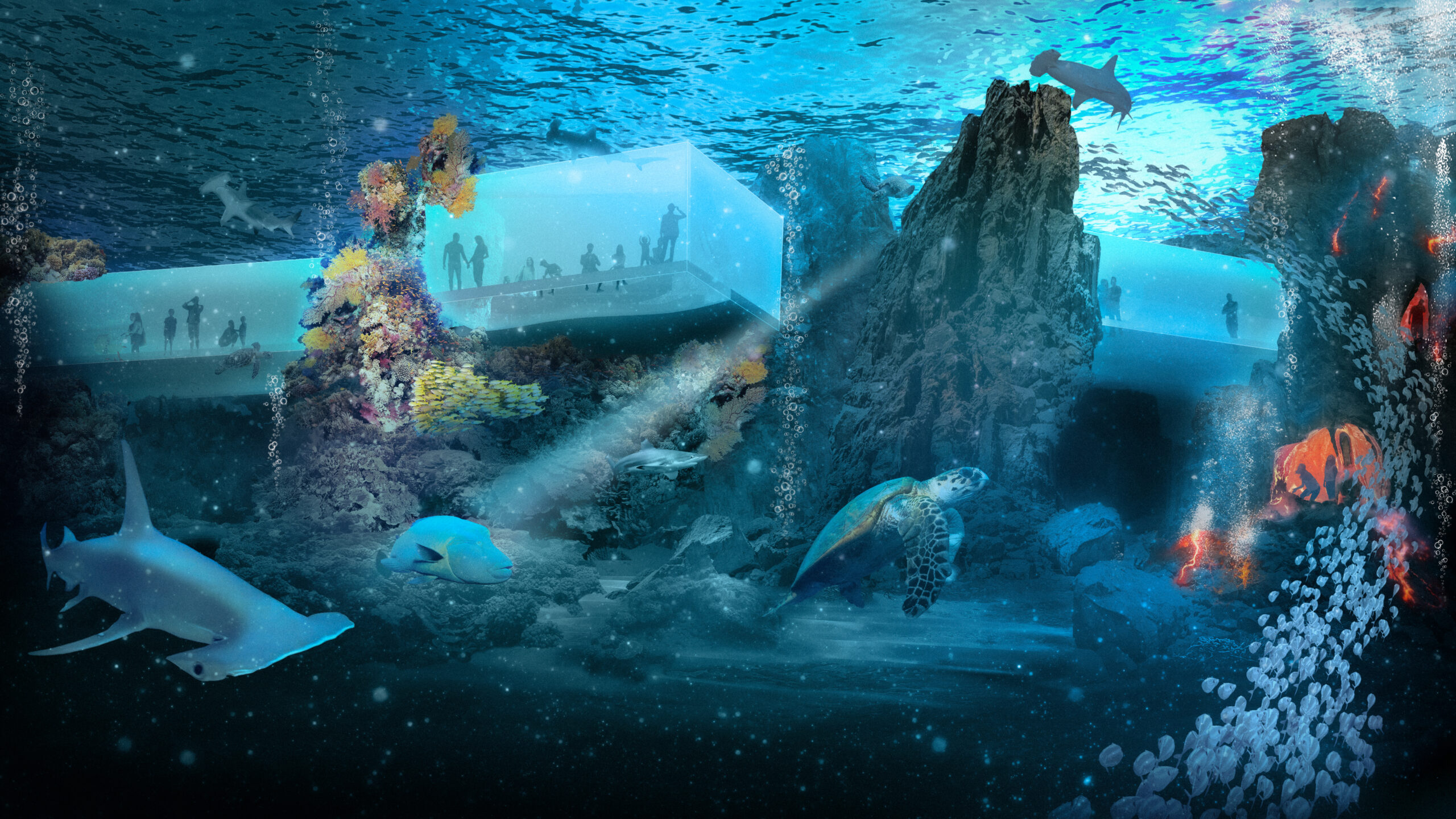
Working with longtime partner SHR Studios, the project team was challenged to create an aquarium concept that has never existed before. In developing a suite of bold new concepts — including an underwater volcano, a dynamic tide pool habitat, and a 2-million gallon barrier reef experience — the team delivered.


Image credit: SHR Studios
Customizing the Research Instrument
As there were multiple markets competing to become the Michigan Aquarium’s home, Canopy and H2R Market Research facilitated the development of a custom research instrument that queried a large sample of residents and visitors within each market in order to assess the likely attendance and revenue potential that each location could support.
Best-in-Class Modeling
To ultimately determine the operating posture of the Aquarium in each location, Canopy’s industry-leading economics team used the outcomes from the research instrument to develop a dynamic projection model that demonstrated how (and under what conditions) the Aquarium could sustain and thrive in each location.
Result:
The process conclusively demonstrated that there was a strong likelihood that the region could support the Aquarium as envisioned, and that one of the locations under consideration offered a much more compelling case for a thriving and sustainable organization. Fundraising and next-phase design work for the Aquarium is currently underway, with an anticipated opening to the public late this decade.