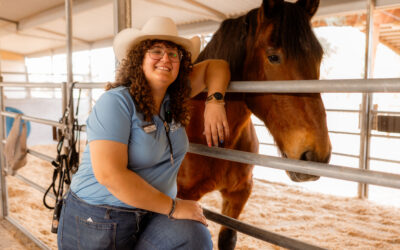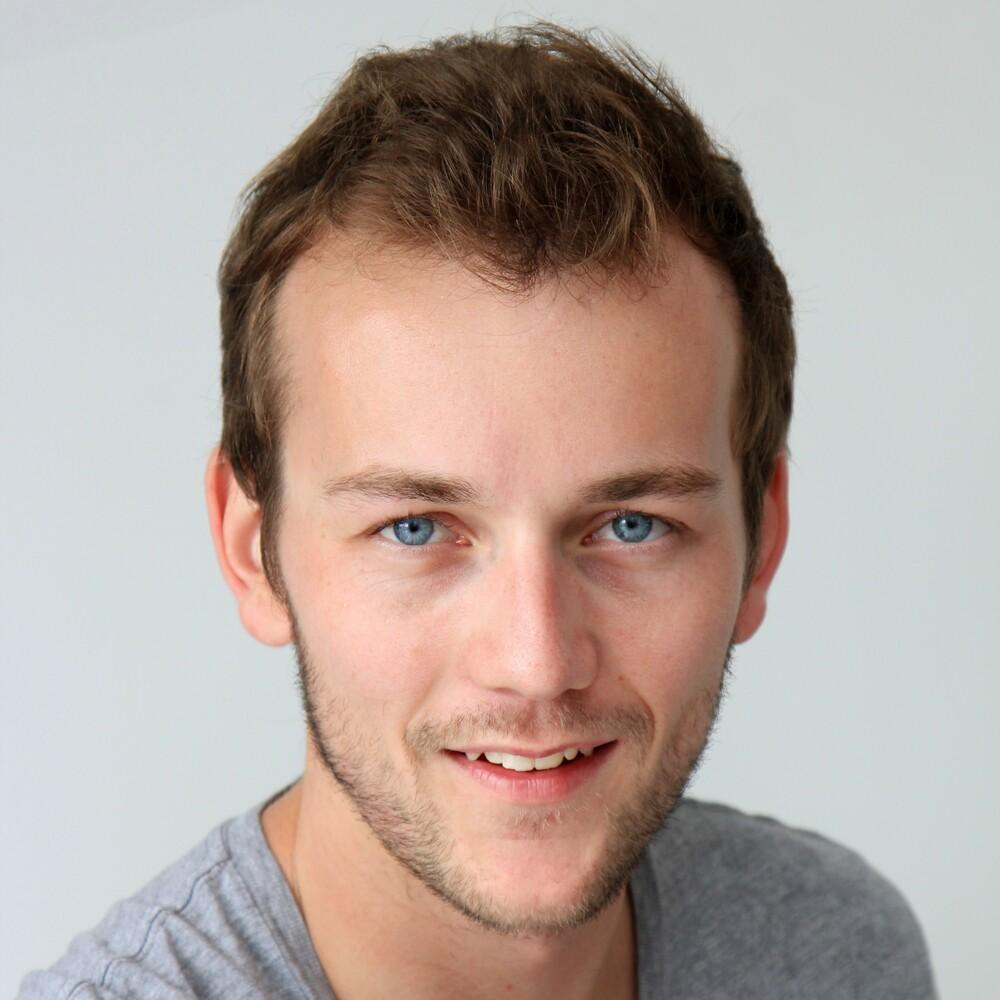
I was so happy that Dean agreed to participate in an interview regarding his perspectives on leadership. I’ve known Dean for several years and have watched him grow from a leader in the conservation education world to his current role as Vice President and Deputy Director at the San Diego Zoo. Dean is an up-and-coming leader within the Association of Zoos and Aquariums (AZA) who successfully marries leading from a business perspective with authentic caring for people. He also has a strong vision for the Association and I can’t wait to see him in a CEO position.
What qualities of a great leader do you seek to embody?
I enjoy helping people find balance in their lives to be successful both professionally and personally, helping them grow and build capacity in their teams and maintain happiness.
I see advocacy for my team as my biggest job – I tell their story to the rest of the organization. This works in reverse too – it’s my job to tell the story of the organization to my team and help them understand their important role in the organization.
What experiences have been most influential in helping you prepare to lead a mission-based organization?
I’ve worked at many places, in many different roles, in many different sized organizations, from very simple to really complicated. That experience has helped me to meet and work with a wide variety of people in different settings and has helped me be adaptable on any given day.
I’m grateful to have had leaders who have trusted me when I’ve done wacky things, like trying initiatives that are weird or we haven’t done in the past, or simply trying new things knowing they‘ll sometimes fail. The support of these leaders has been helpful as I’ve moved to new organizations and applied these skills in new ways.
What’s the most important risk you’ve taken in your career so far, and why? Did it work out?
The biggest risk I’ve taken is when I left Phoenix Zoo to work at the New York Aquarium. I was very comfortable there as the School and Family Programs Supervisor. I had implemented all the systems, the team was great, my wife and I had just had a baby, Phoenix was comfortable. Then an opportunity presented itself to work for the Wildlife Conservation Society (WCS) where I would be totally uncomfortable in a new city, where we’d have no support and family, while trying something weird. My mentor and former leader, Ruth Allard (SVP, Conservation Science, Learning & Engagement, Arizona Center for Nature Conservation/Phoenix Zoo), really encouraged me to jump off this cliff – noting that there is never a perfect time to change jobs. Knowing I had someone in my corner made all the difference.
What changes have you seen in leadership in this profession since you’ve begun working in it?
Leaders are expected to be competent in areas that they weren’t previously. We expect people to talk about very complicated issues, to lead in areas that aren’t in their area of expertise, and to tackle some big topics – whether that’s DEI (which can be uncomfortable and scary) or thinking about compensation across our entire profession (which used to be very taboo).
Leaders are now expected to take care of people. This focus on “people first” has moved much more into the forefront. We thought there would always be a pipeline of incredible people that would choose our profession no matter what, and we’re now discovering otherwise. Thankfully now there’s a better understanding that we need to nurture people and provide for them in new ways.
We not only expect leaders to be competent in key technical skills but, perhaps more importantly, to lead organizations in complex topics. For most of us, these topics aren’t part of our primary expertise and that can be daunting.
Are these changes going in the right direction? Are they enough? If not, what else do we need to do?
I think we’re moving in the right direction, but I don’t know that it’s ever going to be enough. When we think about the future of zoos and aquariums, leaders need to be more focused as community leaders – to become part of the community in a way they never did before. It can’t be a surface thing. If we’re going to survive and thrive in the future, we need to have leaders that are willing to be vulnerable with communities, and even let other people help set the goals of the organization. While this is scary, I think it’s the future.
We also need to help leaders learn how not to lose momentum on key initiatives and strategies. It’s so easy to just move on to the next thing. We need to help leaders understand how to keep a focus on those long-term commitments.
What do you see as the next big trend(s) in our profession?
Cultural attractions will have to be closer and more reflective of their communities, and that may mean sacrificing some power to the community to some degree. This must be more than outreach and must include determining how to give communities a voice and how to involve them in actual decision-making.
In zoos, habitat design will morph in the future to move away from the passive viewing of animals. It won’t be enough to be a place where people take a walk and sometimes see animals. There needs to be opportunities for engagement and real interaction that then moves people into conservation action. How do we create fun and meaningful experiences that motivate people to do something?
Animal wellness will improve as we continue to evolve our thinking about our zoo sites as 24-hour experiences for animals. We must invest in the 24-hour life of the animals in our care. There’s significant improvement still needed in this area. In the past, we’ve designed experiences for when visitors are there, or when our wildlife care people are there, but not for when the animals are there alone.
Who do you look up to for inspiration or mentorship (inside or outside our profession)?
Ruth Allard has been a mentor throughout my career and has been a crucial sounding board for me. She taught me to advocate for people, to bounce ideas off others, and to know they’re always in your corner. She’s always been a cheerleader for me and I’m very grateful.
Amos Morris, Zoo Director at Milwaukee County Zoo, has taught me about having balance and finding balance. He lives it. I’ve been around him when things are crazy, yet he’s always the same and always consistent and calm. We’ve also had great conversations about DEIA and the future of our profession. I’ll always be grateful for his mentorship.
What advice do you have for other emerging leaders?
Focus on building your network, but in an authentic way. In some ways, our profession is so small, and having colleagues and friends across AZA has been the biggest thing that has moved my career along, kept me sane, and kept me in this field.
Look for opportunities to diversify skills and experiences. Even if you know you’re in the right field, it’s only going to benefit you to have opportunities to observe how others work. This gives you a frame of reference and builds your capacity for empathy. Being well-rounded and looking for opportunities that make you uncomfortable will provide professional and personal growth.