By: Grayson Ponti, Canopy Strategic Partners Content Contributor
Over the past two years, the zoo world has seen an unprecedented shift in executive leadership as several veterans have retired, leaving numerous influential positions open often for the first time in decades. This exodus has allowed a new generation of talent to rise to the top and drive zoos and aquariums forward in the years to come. This new cohort has the exciting challenge to take on the legacy of their esteemed predecessors while also navigate a never-changing world and bring the profession to the next level. This includes an increased focus on organization culture, servant leadership, animal welfare, conservation, education community engagement and DEAI.
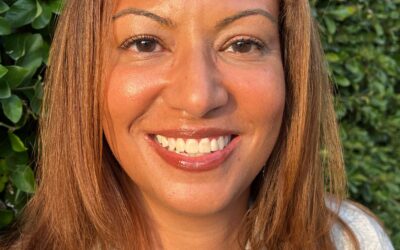
With this paradigm shift occurring, I sat down with Lisa Marie Avendaño, the Bronx Zoo’s Deputy Director who started last year. She previously spent 25 years at the Houston Zoo working her way up from veterinary technician to Vice President of Animal Programs. She got to help lead the design and construction of a game-changing capital campaign reimagining half of the zoo into world-class habitats directly tied to Houston Zoo’s conservation partners. Lisa Marie also serves on AZA’s Ethics Committee and recently finished her MBA. Below are her insights into what makes a great leader and her personal leadership journey.
GP: What makes a great leader?
LMA: Great leaders model best behaviors that align with the values and the culture of the organization. When we manage people, we have a significant amount of responsibility to facilitate team functions, create and then implement strategy through our teams’ tactical work, set expectations and clarify roles. Through this work, we have myriad opportunities to model best behaviors that show care and empathy for our staff and demonstrate that we choose to operate through a set of core values. For me, that centers around respect, clear and transparent communication, and just aspiring to be an authentic leader. Through, this we can best support our teams by fostering environments that build confidence, hope, optimism and resiliency.
GP: What experiences were most influential in helping you learn how to lead a mission-based organization?
LMA: I think being a long-term member of a team was an important experience in learning to lead. When you’re a member of a team, and I mean really in the work and committed, you go through a wide range and depth of experiences in achieving goals together. In working with different personalities, skills and perspectives, you learn how to complement each other’s efforts. You experience failure and recovery. [You gain] that resiliency which is so critical for learning from mistakes and then [figure out] how to redirect and keep going. In all these team settings and experiences, you not only come to understand the tactical aspects of achieving strategic goals but you also learn how to work closely with others. This is where we learn to have empathy and understanding for each other, how to support and celebrate the contributions of others, how to inspire and motivate each other, and how to be accountable to each other and to the strategic goals that make up the team’s contribution to the mission. I think this translates quite well to the leading organizations. Instead of individual team members we are often working with departments and divisions, but the principles are the same.
GP: What strategies do you recommend to enhance diversity at the higher leadership levels?
LMA: In our organizations, we have or should have existing frameworks or programs that can dovetail with our evolving diversity initiatives. As managers, we create and maintain succession and development plans. As part of that work, we should be reviewing and updating our plans routinely, asking ourselves if there is anyone we are overlooking. Is there anyone that we have not seen as a leader before, but that could really flourish with some support and development?
That is a basic part of succession and development planning, but in enhancing diversity, we might need to ask ourselves more challenging and difficult questions. Is there someone that I’ve been biased to in the past that I may have overlooked as a potential leader? Is there anyone that I don’t necessarily share common values with and therefore may not have been truly open to recognizing their talents and potential? This can be part of a practice in addressing our biases, unconscious and otherwise, across intersectionalities. We should have development plans and opportunities available to grow all of our employees every step of the way, but here I am addressing those manager, director, and executive leaders that will typically be working on a succession and development plan for 1-3 individual that could take their roles one day.
GP: What advice do you have for other emerging leaders?
LMA: Be sure to diversify your experience. Seek some diversification of your experience in areas wholly different from your previous work or at least in areas adjacent or complimentary. I think when you can diversify your experience, you become a better partner to others in the zoo and you show leadership above you that you can be comfortable learning different parts of programs and operations. I would also advise that you document growth, development and accomplishments. I think the best leaders are often humble leaders that operate with a lot of humility and they’re less likely to see what they’re doing as worthy of documenting. Most people don’t like updating their resumes, and that is understandable, but it is necessary. At least keep a list of new experiences, skills and accomplishments. Many, many people have asked for my help in getting ready for applying for a new role or opportunity and in reviewing their resumés, I see so much that they left off, forgetting great work or skills they have recently developed through volunteer work, their part in a big zoo wide project, or a course they have taken. Take notes and regularly add to the story that is you!
GP: What’s the most important risk you took in your career so far and why?
LMA: I would probably say leaving Houston Zoo and coming to the Wildlife Conservation Society and the Bronx Zoo. I had spent my entire career at Houston Zoo and it was a place that had provided an enormous diversity of experiences, opportunities and successes. My last six years there was as the vice president of animal programs, spent under the leadership of Lee Ehmke. In that time, he led us through the creation and implementation of a strategic plan, master plan and business plan. I cannot fully express what a rich education that provided to me and everyone else working at Houston. We had many new leaders join us at the executive level, including Kristin Finney, our vice president of human resources and she was someone that impressed upon me the importance of departmental planning, organizational development and succession and development planning. I really took that to heart and it was the first time that I could really understand how critical it is, for both succession and business continuity, that we actively ensure there is someone below us with the skills, expertise and institutional knowledge ready to step up into top leadership.
Working those three plans across the organization through truly integrated efforts, getting to structure my department in a way that I thought was best for achieving the goals of the mission and watching the zoo transform through the master plan was an incredible experience. I think many people were puzzled by my decision to move on but it was a good leaving. It was the best leaving I could imagine knowing that we had achieved so much, knowing there was a great leader I had helped to develop to take my place and knowing that I could bring what I had learned to another organization. That is what we should be doing across our AZA institutions, some exchanging of ideas and cross pollination for diverse thought in management and strategy.
GP: How do you keep your team motivated despite conflicts and obstacles?
LMA: I think it is critical to remember and rely upon what we know about motivating employees in general. Our staff want to be effective. They want to understand the expectations and do their jobs well while also receiving recognition and appropriate compensation for their efforts. We also know that some level of autonomy in their daily work is important, because as they develop the skills and knowledge that they need to be effective and successful, having some level of control is a natural next step. We also know that people want to be connected and understand how their efforts contribute to greater overall mission and work of the organization. For this we need to effectively and routinely communicate how they are connected. I think if we keep these things in mind and create teams and work environments that support those key factors then the outcome will be highly satisfied staff that demonstrate positive workplace behaviors and attitudes. High satisfaction teams tend to stay focused on forward movement and are best equipped to weather the unavoidable conflict and challenges that are just part of the work.
GP: How do you generate great ideas in your organization?
LMA: Great ideas can come from just about anywhere. I think the best and most inclusive organizations know that and operate in ways that ensure there are appropriate venues or channels with which to receive input and feedback from staff. [This includes] everything from safe and inclusive team or organization wide meetings to routine one on one feedback loops. What we must remember now is to reserve snap judgments of ideas. As managers and top leaders, we need to examine our level of openness. I think sometimes we go through the motions, or an organization can go through the motions, when beginning strategic planning or starting a new project, and we have focus groups or stakeholder meetings, as a matter of checking the box. We need to make sure we are really open to hearing what staff are saying so we don’t miss great suggestions and ideas, that sometimes just need support or a bit of reworking to make them mission aligned goals or allow them to address some need or problem.
GP: What do you see as the next big trend(s) in our industry?
LMA: I think that we will be continuing to learn about and evaluate the well-being of our staff and address recruitment and retention. We know how to garner the support of boards and donors for capital campaign so that we can change the infrastructure and the exhibits in our zoos and aquariums, but do we know how to leverage support to make the changes we need to have in compensation and valuing of our front-line staff?
GP: How do you continue to grow and develop as a leader?
LMA: I’ve tried to stay engaged with all levels of staff throughout the depth and breadth of the organization. I try to never miss an opportunity to collaborate and learn from others. I will finish earning an MBA this summer and that makes me feel better equipped than ever to support my organization across significant areas of management and strategic plan implementation. I think this is important because our strategic goals are all interrelated. Welfare goals are financials goals, and financial goals are guest engagement goals and it just keeps going. It’s all connected.