Over the past two years, the zoo world has seen an unprecedented shift in executive leadership as several veterans have retired, leaving numerous influential positions open often for the first time in decades. This exodus has allowed a new generation of talent to rise to the top and drive zoos and aquariums forward in the years to come. This new cohort has the exciting challenge to take on the legacy of their esteemed predecessors while also navigate a never-changing world and bring the profession to the next level. This includes an increased focus on organization culture, servant leadership, animal welfare, conservation, education community engagement and DEAI.
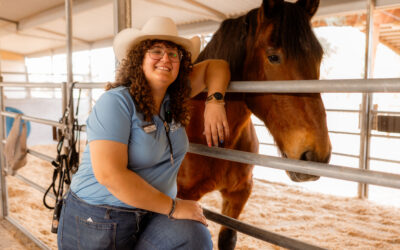
With this paradigm shift occurring, I sat down with Cara Treadway, Vice President of Mission, Guest, and Community Engagement at Philadelphia Zoo, to talk about her leadership journey. Cara worked her way up the ranks in Busch Gardens’ education departments, getting experience engaging people in conservation action and seeing the inner workings of one of the largest zoological institutions in the world. Afterwards, Cara went on to Zoo Tampa for six years, where she led the education and guest engagement teams, gaining experience working with operations before joining the executive team of Philadelphia Zoo in August 2022. Additionally, she serves on AZA’s Professional Development Committee. Below are Cara’s insights into what makes a great leader and her personal leadership journey.
GP: What makes a great leader?
CT: I saw a cartoon yesterday that had two boats: one that had the staff (crew) in the front of the boat paddling with the “boss” at the back dictating what to do, and the other that had the staff and leader all together, with the leader at the front of the boat showing the way while paddling alongside them. I think that is a very accurate descriptive visual- a great leader will not sit back and tell staff what to do. Instead, they will be right there with their staff to navigate those waters together as a team. A great leader models exceptional behavior so that staff naturally want to follow their lead. They emulate a good work ethic, create a positive culture, and set clear expectations, but do all this with compassion and kindness that leads to staff choosing to follow.
GP: What experiences were most influential in helping you learn how to lead a mission-based organization?
CT: I’ve been really lucky to have gained experience from both non-profit and for-profit organizations. My experiences at each of them have really shaped how I lead. About 16 years of my career were spent at a very large corporate theme park/zoological institution (SeaWorld Parks and Entertainment). Clearly the financial side of that organization is a very high priority, but there was also a huge focus on changing behaviors of guests to become more conservation minded and to protect animals in the wild. A very robust 501c program stemmed from the organization that was a conservation fund that gave opportunities and financial resources to many smaller programs and organizations to carry out mission-based projects. I don’t think that would have been so incredibly successful if it wasn’t for the high success of the company as a whole (even though they are separate entities). Learning how to balance the fiscal need with the need to support and integrate the mission was key to my development. They go hand in hand, and if you don’t have the right balance, you could fail at both. We cannot further our mission without the proper funding to do so, and my experiences have taught me how to manage this effectively.
GP: What strategies do you recommend to enhance diversity at the higher leadership levels?
CT: I believe the key to promoting diversity at any level is reaching all audiences early on. Providing equal opportunities and resources to all to encourage empathy towards wildlife and create that next generation of leaders. Supporting and providing young people of all backgrounds and abilities with the same opportunities to learn about and experience what it is like to work in the zoological field, and why it is so important to conserve and protect the world around them. Additionally, to continue to provide opportunities as these young people rise through school and support them through internships and positions within the organization.
GP: What advice do you have for other emerging leaders?
CT: Take chances and don’t be afraid to swerve off of the path that you thought you were supposed to follow, because I can guarantee you will have some of your biggest learning moments on those side roads.
GP: What’s the most important risk you took in your career so far and why?
CT: Deciding to take on my current role at Philadelphia Zoo. Up until about 4 years ago, my career had been pretty defined in the area of conservation education. I was extremely entrenched, knowledgeable, and super comfortable in that world. I was given the opportunity at Zoo Tampa to take on some more “operational” roles, by leading events, graphics and managing a fairly large attraction at the zoo. I found that I really liked that more operational side, and I was actually pretty good at it. When I applied for my role here at Philadelphia Zoo, I knew it was completely outside of my comfort zone in so many ways. Of course, leaving my home of 20 years was incredibly hard, but it was also [exciting] that I was going to be doing some things that I never had even considered before, like managing guest operations in parking, admissions and attractions, and being the liaison to all of the outside vendor partners for food & beverage, Retail and entertainment.
I questioned my abilities and whether or not this was the right thing for my career. Fast forward a year to today, and I am so thankful to have been given the opportunity to be in this role, and so glad that I took that leap of faith. I am privileged to continue to oversee conservation education and events here in addition to my new responsibilities, and the breadth and variety of areas within the scope of my role make each day new and exciting and are giving me so much new experience. It was a risk that is making me a better, more well-rounded leader.
GP: What changes have you seen in leadership in this industry since you’ve begun working in it? Do you agree or disagree with these changes?
CT: I’ve been in the zoo and aquarium industry for 25 years, and there have been so many changes in leadership style. One of the biggest changes I think is the clear steps that leaders have taken to create a more staff-centric culture. 25 years ago, there wasn’t much talk about work/life balance or being healthy mentally as well as physically. Focus on what was best for staff well-being was lacking, and research into productivity being linked to a positive and healthy work environment was in its early stages. Today, there is this entire movement around empowering leaders to ensure that their staffs’ mental health and well-being are not just being taken into consideration but also being positively catered to. Leaders are being encouraged to create positive work environments with resources available where staff feel supported. 100% agree with these changes!
GP: How do you keep your team motivated despite conflicts and obstacles?
CT: I think if there is one positive thing that the pandemic taught us it is how working together to put forward all your efforts during a very difficult and stressful time can lead to a strengthened workplace and elicit positive results. I encourage my team members to lean on each other and their management team during times of crisis, to talk openly and honestly with one another and to offer solutions to any challenge they may come up against. Create a culture where staff know that they are part of the solution and where their ideas are heard and utilized.
GP: How do you generate great ideas in your organization?
CT: It’s rare that any great idea is created in a silo. My very best ideas have come from brainstorming sessions with my teams and other colleagues, or just from conversations that turn into creative meetings. Collaboration is essential to coming up with the next big idea, and to turning it into a reality.
GP: What do you see as the next big trend(s) in our industry?
CT: What I’m hoping will grow into a bigger trend is improved outreach to neighborhoods that zoos and aquariums are in and better engaging the people that live in those communities. The Philadelphia Zoo does an incredible job at reaching the hyper local communities surrounding the zoo, which encourages those neighbors to be invested and involved in the zoo, and hence not only supports and spreads our mission, but creates a sense of pride for the zoo within the community. I am hopeful that more zoological organizations will continue to enhance their community engagement programs. It’s a win for the organization and it’s a win for the community as a whole.
GP: How do you continue to grow and develop as a leader?
CT: I keep challenging myself to step further and further outside of my comfort zone. I’m a textbook introvert, so I push myself to mingle and network with other people within and outside of our field, when that is not something that comes naturally nor is comfortable for me. Likewise, I am super comfortable with being in the education world, so I keep stepping outside of that box to get more and more hands-on experiences and knowledge in different areas. For me I learn best when I’m being challenged, so I develop myself as a leader by taking calculated risks in order to learn and grow.