Canopy is proud to be sponsoring three members of MIAZS’ inaugural Advancing Minority Leadership in Aquariums & Zoos Program. In partnership with Leadby, this multi-faceted professional development opportunity is investing in BIPOC mid-level leaders to accelerate their leadership growth and readiness to advance in their careers.
The AMLAZ program, which kicked off in March and is running through September, includes:
- Leadby’s Management Skills Accelerator, a comprehensive program designed to enhance people management skills
- Individual Development Plan (IDP) to help participants identify objectives, establish actionable strategies for enhancing leadership skills, and empower personal growth
- Cohort Coaching Sessions & Project Feedback for virtual collaboration, fostering a dynamic environment to enhance presentation skills, facilitate constructive feedback exchanges, and collectively support the development of impactful projects for their respective organizations
- Monthly Individual Leadership Coaching to help participants reach goals created through their IDP
- Assessments & Tools — including The Leadby 360, Behavioral Preferences, Emotional Intelligence, and Motivation Assessments — to foster a better understanding of how they lead and where they can lead more effectively
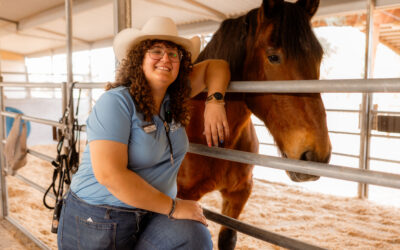
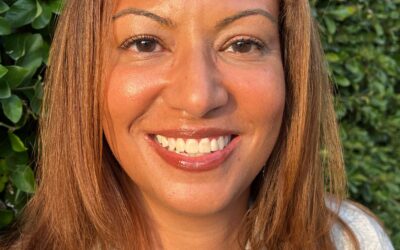
We sat down with David Smallwood (Assistant Supervisor of Education, Dallas Zoo) and Rosalío Rubio (Curator of Education, Los Angeles Zoo), two of the individuals we’re sponsoring, to capture some of their insights from the program thus far.


On how the first three months have gone:
David: We know this is a program that serves a great purpose, not only in the minority community but in management — zoo and aquarium management training is not something that is given often. So when you get the opportunity to learn more about being a leader, you’ve got to dive into those opportunities. I’m very happy that I was given the scholarship to go into the program — which is even better, you know, so I’m a fan. The program is one of my favorite things that I have going on right now (I have a lot of things going on right now, and this is one of my top things)! The program is excellent.
Rosalío: It’s been amazing. It’s an amazing group, and I think we’re all learning from each other and feeding off each other’s energy and passion. I really feel like a lot of us are bonding and creating this network that is only going to be better for the future. It’s exciting to see the people who are going to be the future leaders of AZA.
On building community:
David: The people in the program are awesome. We’re from all around the country. The funny thing is that we all have commonalities — we’re all figuring things out. Some of us have the same issues, and therefore we have some people who have answers that we might not have found on our own. It’s good to be part of a cohort of people from diverse backgrounds; we have a lot of different people and it’s good to pool our minds.
Rosalío: We’re building a network. That’s exactly what it is: building the network. And then having the idea of looking for mentors — if you want to go somewhere or look for ways of being, then you should look for people that are like that and reach out to them. This program helps you think about things that maybe you didn’t think about to help you on your journey. Networking and creating these ideas can give you that framework for success.
David: Connectivity. I am getting to connect to people who I would not have met otherwise — the amount of people that I’m meeting and the connectivity is awesome. I appreciate being a part of the cohort, with the team spread out in diverse areas, working toward the goal of progression and growth. That’s what it is. Growing. That’s amazing. I’ll be a better leader than I was before starting this program.
On learning about themselves through the assessments:
David: We get 360 reviews and I really like that — it’s a big process, and we have to be okay with whatever feedback we get. It could be peers, it could be leadership, or it could be your staff. They’re anonymous, so you’re pushed out of your comfort zone a little bit because you’ll know what’s going on in their minds. We want to grow. So, we need to see the areas where we’re lacking or areas where we can grow so we can be better leaders.
Rosalío: I feel sometimes, as I’m getting into these leadership roles, a little bit of imposter syndrome. Is this really what I’m supposed to be doing; is this really how to lead the team? So in the 360 reviews, I was scoring myself low in areas where others were scoring me high. I was self-deprecating, but I was undervaluing things that others were seeing as a real strength. So I need to change my own perception of myself and stop thinking about being less than.
It could be systemic — every place I’ve been, I’ve been on the minority side, to put it plainly. So I always feel like I’ve had to do extra to be at the same level. Now that I’m leading a team, this innate fear start to happen. Am I supposed to be here? And then I have to really quickly get myself out of it and say: You’re here because you’ve done the work. You’re here because you have the education. You have the training. You’ve put in the work. So why are you second guessing yourself?
It’s self-realization. So when things came up in the 360 review, I could see where I could put in work. Everyone was super supportive and any of the criticisms were constructive. Everyone is very open to giving and getting feedback as well — so that’s what I need to do. I need to not be afraid of the feedback and ask for more of it.
On self-development and growth:
David: I’m good at talking, but I want to be more of an active listener. That’s something that came up — I have a want as a teacher to explain things to people, but sometimes just need to make room for people to express how they feel about something without trying to guide them.
Rosalío: The program is really creating a self-awareness of my style. It’s funny because as a teacher, you realize there are different learners, right? So you have to adapt your style to all these different learners — but it never registered that it’s the same in a workplace. There are different personalities, there are different ways people perceive things, and the things that people need from a leader can be completely different. It was one of those aha! moments, and so now I’m working with my group on it. A good leader is going to be able to understand what each person needs so that they can do their best. I’m working through that and figuring it out.
On advancement and inspiring others:
David: I’m in inner city Dallas, and I love being a face in the zoo because when kids from this neighborhood come to see the zoo, they see my face. Historically, zoos haven’t been representative of minorities — even in this neighborhood, which is a nice little melting pot, but the numbers at the zoo are kind of disproportionate.
In the program, we share commonalities — we’re part of different communities but may have similar situations. So the fact that we’re coming together and we want to grow zoos and aquariums to make them more inclusive and more available…we want people in our communities to see: Hey, you can work here too. I go out and talk to some of the high schools around; one of my jobs is to let them know that they can do this. And when they come to the zoo, with the training that I’m getting, it’s making me an even bigger face. Advancement is in mind.
Rosalío: It’s giving me the tools and giving me the idea that — you know what? — you should continue to want to get better and increase, and not just be complacent in the position that you’re in. You can do more and if you only have a little bit of time, that’s still enough to make a difference and impact. I just want to continue to move up the ladder to see how far I can get, and it’s exciting to think about the future now.
This is all coming out of the program: the idea of creating some sort of pathway to getting high school students to experience and explore jobs that they maybe didn’t know they could have, and somehow creating a network of mentors. So before high schoolers make that commitment to either go to college or not — or pursue a field — they can get more real-world experience.
Growing up, I was two blocks away from the Natural History Museum in Los Angeles, but it was always like: Oh, can’t go there. That’s not for us. It’s changing now, which is great, but the idea of going into communities and saying: Hey, you can get a job there. Check out these places where you can get a job, or an internship, or volunteer. You can get the experience and maybe have a different career than you thought. That’s the goal; that’s the hope.
On why this program is valuable:
David: We have different voices that are getting a good chance to speak. People who might not have gotten a chance to speak or might not have been able to approach their organization at the higher levels and tell them, “Hey, this is what I bring to the party.” The field has been heavily one-sided; it’s the truth. There’s been one type of face you see. This program puts us front and center. There’s wealth, and people have different backgrounds, and diversity matters: because you never know where the next big push comes from or who it’s pushed from, and if we’re only listening to one person’s voice, then the whole story is not being told. I like the fact that the whole story can be told in this program.
Rosalío: The foundation that’s being built here is something that is going to continue. I’m already witnessing the changes that are happening with a few tweaks I’ve been making in how I work with the team. This program is really helping in covering who you are and what your potential is, and then giving you the framework to get better. It’s opening my eyes to what I could be doing better, so now I have to do the work to implement those changes, and I can become more valuable as I move up the ladder. It’s been a great learning experience — not only becoming self-aware, but really, it has reignited a passion.
It’s invaluable: the subject of learning. It’s just great. I know we’re not even halfway through it, but I’m already excited about continuing on and helping in the future.
David: I believe that anybody who commits to the program entirely will reap dividends. It will be great. And it won’t just be great for that person — it’ll be great for our field.