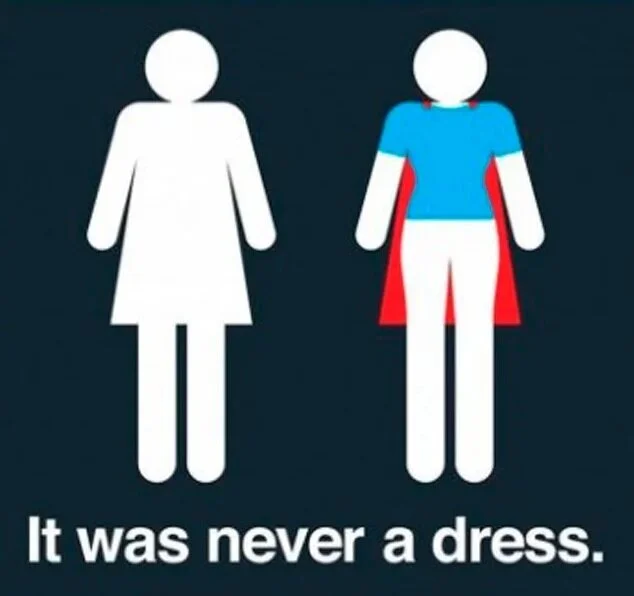
We’ve talked a lot in the past year about the new opportunities that are beginning to cascade in the AZA world, and how the moment seems ripe for embracing change. I’ve wondered cynically when we’d start seeing the profession put its money where its mouth is, and last week did a lot to change my skeptical smirk to a delighted grin, as word spread that two of my dearest friends are about to take on the executive leadership role in high-profile zoos. In November, Dr. Hayley Murphy will become CEO of the Detroit Zoo, and two months later, Dr. Megan Ross will move from Zoo Director to CEO at Lincoln Park Zoo. A big congrats to both of them! Once I stopped jumping around and texting everyone memes like the one below, I calmed down enough to think more deeply about the significance of these well-deserved selections.
Does it make a difference to have two women join the CEO ranks? All of the information I find indicates that women lead somewhere around 29% of AZA institutions, the numbers decreasing as annual budget increases. Today, there are five women CEOs of zoos or aquariums with attendance of over 1,000,000 guests. With Hayley and Megan joining those ranks, women will make up only 15% of leaders at large AZA institutions (seven of 46 organizations), which puts the smirk back on my face a little, but perhaps that’s a topic for another day.
How many would be enough? When Justice Ruth Bader Ginsburg was asked at what point there would be enough women on the Supreme Court, her response was, “When there are nine.” That doesn’t mean that I think all AZA institutions need to be led by women—diversity never means ‘all the same’ of anything, and the cause of equity is not one of retribution. So what number is enough? I don’t know, but I think the answer is “more.”
Seeing Hayley and Megan take on the top leadership positions at such prominent institutions makes me look forward with anticipation and optimism. The simultaneous election of Razan Al Mubarak as the new IUCN President, the first woman from West Asia to lead the IUCN and its first Arab president in more than four decades, adds an exclamation point to the new and bright future ahead.
This shows the world is changing. All while the great ongoing social experiment of the COVID-19 pandemic is still playing out. There’s no clear picture of what the world will look like when it’s over (or even what “over” means). The seeming endlessness of 2020—the year that is now in its 21st month—has put us in a period The New York Times called “languishing.” The workplace vibe and the recruitment and retention landscapes have changed for many industries, including our mission-driven profession that demands passion and energy.
I don’t know what the antidote for languishing is, but I do know that the same old strategies and practices won’t fix it. I wrote a few months ago about the critical importance of strategic skills (formerly, and misleadingly, known as “soft skills”)—those emotional and social competencies that promote a supportive workplace culture, staff wellness and work-life balance, and strong cross-institutional relationships. I’m certain that the remedy for languishing lies in that direction, with leaders who can effectively and with sincerity guide teams through the malaise and into the new normal that awaits.
Women have been demonstrated over and over again to have an advantage in these strategic skills—data show that women outperform men in multiple dimensions of emotional intelligence. Those strengths will be key to regaining institutional vigor, passion, and enthusiasm and overcoming the burnout, social isolation, and emotional exhaustion that are the pandemic’s persistent themes. Men can and do perform these roles admirably, and all voices will always be needed, but the moment is made for those gifted with high EQ.
The IUCN’s Marseilles Manifesto sounds a hopeful note: “There is reason to be optimistic. We are perfectly capable of making transformative change and doing it swiftly.” The clarion of the Manifesto demands actions that are precisely the natural talents of these new leaders and other women proficient in the exercise of strategic skills: supporting and strengthening the agency of all partners; promoting inclusiveness in our work; pursuing collaboration and partnerships; ensuring more inclusive and just decision-making in rebuilding from the pandemic; and doing this work from a place of real sincerity and integrity.
Today, I am bursting with excitement and confidence as I watch my two pals step into roles that will advance not only their individual zoos, but our profession broadly. I’m proud to move forward in support of their vision.
I hope their peers feel the same, and that they will observe, support, and emulate their strong strategic skills to bring our profession out of languishing and toward a place where we can all flourish in the advancement of our collective conservation mission.