Congratulations to the inaugural cohort of MIAZS’ Advancing Minority Leadership in Aquariums & Zoos Program, who officially completed the six-month program by sharing presentations of their impactful final projects.
In partnership with Leadby, the AMLAZ Program invests in BIPOC mid-level leaders to accelerate their leadership growth and readiness to advance in their careers. Canopy is proud to have sponsored three participants in the 2024 cohort and we look forward to continuing our sponsorship in 2025.
We caught up with several members of the cohort, who generously shared personal highlights from the program as well as an overview of the final projects they completed for their respective organizations.
Christian Deane
Zoological Manager, Oakland Zoo
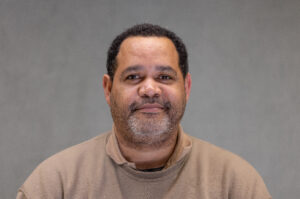
For me, the highlights of the program were very much the 360 Feedback and the Individual Development Plan (IDP). Feedback is so important between staff, and I was able to incorporate them both with my team with positive results.
My final project focused on remaking the Zoo’s performance review document, but also included everything I learned in the course and how I have put it into practice.
Watch Christian’s presentation here.
Tessaliz Quiles Delgado
Education Manager – Community Engagement, Cleveland Metroparks Zoo
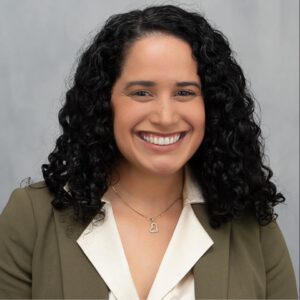
The most significant takeaway from the program is recognizing how much I’ve grown by the time it concluded.
My final project was an educational children’s book highlighting the importance of the Puerto Rican Crested Toad (PRCT) and the impact that the Cleveland Metroparks Zoo has been having on PRCT conservation. The book will be written in both English and Spanish, expanding accessibility to include more families beyond those who speak English. This offers a unique opportunity for children to develop reading skills in two languages. Moreover, the book will be illustrated by a local artist in Cleveland. After the book is completed, my plan is to distribute the book in neighborhoods surrounding the Zoo and in areas in Puerto Rico where PRCT conservation is ongoing.
Watch Tessaliz’s presentation here.
Amber Ginther
Tropical Fish Supervisor, Seattle Aquarium

This program gave me so many tools to succeed as a leader that I want to become; it’s hard to highlight just one piece. I think the biggest takeaway for me is that there are many facets to being a compassionate and informed leader. It is not just one way of being and the Individual Development Plan (IDP) makes it possible to really plan for growth.
My final project was about Indigenous Science and how we can incorporate it into the way we view animal care, in hopes that we can quantify how our participation in the animals’ lives affects their community dynamics and behaviors. It also explores empathy and fostering connections with the animals in our care.
Watch Amber’s presentation here. View the PPT here.
Carissa Delgadillo-Mendoza*
Curator – Water Quality and Aquarium Operations, Steinhart Aquarium, California Academy of Sciences

Being a minority in this industry, it is rare to see someone who looks like you or has a similar background as myself in a position of leadership. I have overcome obstacles throughout my career to get to where I am at. This program not only provided me with the skills to develop into a better leader, but a space to talk to other minorities and share our experiences with one another. This was quite impactful in our Group Coaching sessions where we were able to connect and support each other. Everyone had a voice and the common struggles were eye-opening, leaving me with a sense that I was not alone. Being a leader is not only supporting yourself but those around you as well.
One of many takeaways for me from going through this program was the personal evaluation we did at the beginning. Reading through the responses of my 360 review that was sent out to my peers, direct reports, and supervisors was interesting to see their viewpoint of me. It was a great way to start the program by being able to identify areas I was strong in as a leader and also areas in need of improvement. Responses were anonymous, allowing the writer to be raw in their comments, which was a great way for me to receive feedback. In conjunction with the DISC report, it was so fascinating to see where I fell in the different traits of behavior as a person. A lot of the reports I did agree with, and it helped me learn skills or ways to better communicate with others opposite my behavior or needs. Being able to first evaluate myself helped me go through the program capturing skills that I knew I needed to develop.
My final project is still a work in progress but off to a great start. Working in an Aquarium, saltwater making is essential for our living collection, making it top priority to standardize the operation and management. I worked on bringing two teams together to streamline the saltwater making operation and reduce any variables to the water chemistry. Taking the leadership role with this project allowed me to rewrite protocols, set up training for all involved and establish water chemistry parameters. As I continue with this project, other areas to look at will be implementing more inline meters for monitoring and reducing any outside water chemistry factors as a result of our incoming freshwater that is used to make the saltwater.
Watch Carissa’s presentation here.
Alex Rodriguez
Manager of Diversity, Equity, and Inclusion, San Antonio Zoological Society

As a first-generation American, I’ve often felt the pressure to prove my worth and overcome systemic barriers just to have the chance to be seen as worthy of investment and opportunity. AMLAZ provided a unique space where I was celebrated for my unique perspective and experiences. This program allowed me to shed the constant need to code-switch and simply be myself among a community that understood my experiences. It’s through this authentic connection and the unwavering support of my mentors and peers that I’ve truly thrived. I encourage leaders in our industry to create similar spaces where marginalized individuals can flourish and contribute to the field in their own authentic way. I promise you won’t regret it.
AMLAZ has been a truly transformative experience. The one-on-one coaching sessions were instrumental in helping me uncover my blind spots and develop a deeper understanding of myself as a leader. The long-term individual coaching allowed for the cultivation of a psychologically safe environment where I could truly work towards understand the origin of my own barriers and collaboratively work to strategize paths to overcome them. I was provided space and opportunity to feel safe to fail in order to rebuild and thrive. These unique experiences have allowed me to unlock a new part of myself, empowering me to further fight for marginalized communities within our industry. These unique experiences have empowered me to elevate my leadership abilities to a new strategic level. Building upon my existing experience, AMLAZ has provided me with the tools and insights to think critically, solve complex problems, and inspire others. I am excited to apply this enhanced strategic mindset to advance the mission of the Association of Zoos and Aquariums and advocate for diversity, equity, and inclusion within our industry.
My final project is an HR Selection Workflow Tracker: A Comprehensive Solution. In response to leadership changes within our department, I took the initiative to identify and address potential inefficiencies in our existing processes. By collaborating with my team, we developed the HR Selection Workflow Tracker, a comprehensive tool designed to streamline various HR functions, including:
- Employee Terminations: Ensuring compliance with state payday laws and health insurance regulations.
- Internal Status Changes: Facilitating smooth transitions for employees moving between departments or roles.
- Leave of Absence Management: Streamlining the process for managing employee absences.
- Workforce Commission Updates: Ensuring accurate reporting to state agencies.
- ADA Accommodations: Facilitating the accommodation process for employees with disabilities.
This innovative tracker automates task assignments and ensures timely completion, enhancing efficiency and accuracy. By centralizing information and streamlining workflows, we have significantly improved the employee and leadership experience. Additionally, this cost-effective solution can be adapted to meet the needs of other departments within the organization, such as Finance and Security, by automating tasks and reducing manual effort.
Rosalio Rubio*
Zoo Curator of Education – Visitor Engagement, Los Angeles Zoo and Botanical Gardens

One of the BIGGEST takeaways for me would be my willingness to challenge myself in the coming years! I’m closer to retirement than to the beginning of my career. I started work in the zoo later in life, after an established education career. I always say, “Estoy mas allá, que acá.” But now, I feel I have more to offer and am willing to be open to possibilities.
My project this summer was working with the Paid Intern Project. I worked with the Learning & Engagement interns to develop career skills and programs that they could interpret to the public.
Watch Rosalio’s presentation here.
David Smallwood*
Assistant Supervisor of Education, Dallas Zoo
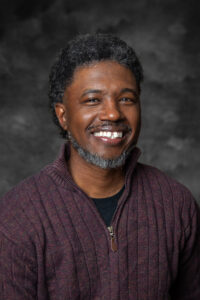
This program is great in so many ways that it is hard to narrow it down. If I had to choose, I would say that conversations about issues that are often left unsaid were a great area to highlight. I learned a bit more about being an operator of change and that a lot of industries could learn to grow in positive ways if they listen to voices that often go unheard. I am thrilled to have met so many likeminded people from all over who will help lead the field of zoos and aquariums into what I feel could be a golden age of positive change and inclusion. This cohort was great, and I would certainly recommend it for those looking to sharpen your leadership skills.
My final project for AMLAZ: I am an avid conservationist and teach thousands of people a year how they can help wildlife across the globe through small actions and changes. My project this year was to help ensure that Dallas Zoo is living up to the mission of “Engaging people and saving wildlife” by ensuring that we are an organization that is focused on sustainability. I and a group of like-minded zoo staff — who call ourselves “the Sustainability Steering Committee” — spearheaded several efforts to help the zoo be more sustainable in the areas of energy, water, staff awareness and waste management. I am happy to say that after our efforts this year, we have gotten the zoo’s executive board to commit to solutions that will not only save hundreds of thousands of dollars but also hundreds of thousands of gallons of water — if not more! If you want to learn more about this project or some of the others that I am working on, feel free to reach out to me on “the social medias” or email!
My current project is twofold in that I am going to a local high school twice a month to teach job skills such as critical thinking, collaboration, time management, and so forth. I will also be teaching the students about conservation and stewardship of resources and land. I know this may all seem like typical things that we teach high-schoolers, but in this case, our project will be working on building two greenhouses from the ground up. The school is in what is called a “food desert” (a region where people have limited access to healthful and affordable food). This may be due to having a low income or having to travel farther to find healthy food options. I want to teach the students skills that will help them thrive not only in school and the workforce, but also how to grow healthy food with limited space needed. My ultimate goal will be to figure out a way to eliminate food deserts, but baby steps!
Watch David’s presentation here.
Max Wright
Community Engagement Coordinator & Educator, Virginia Aquarium
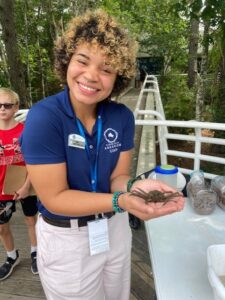
Participating in the Advancing Minority Leadership in Aquariums and Zoos program was transformative for me, especially as I navigated a challenging period of burnout and emotional fatigue. The career one-on-one chats offered invaluable support, creating a safe space for me to confront and dismantle my imposter syndrome. Through this program, I learned to define the kind of leader I aspire to be, with the guidance to set actionable goals that would help me grow into that vision. Today, I am a more confident and effective leader, worlds away from who I was before joining the program, and I am grateful for the growth it fostered in me.
My final project: The Virginia Aquarium’s youth volunteer program revamp aims to create a robust experience for teens by building a multi-tiered program that engages local youth throughout their adolescence and into young adulthood, using the foundation of our existing programming. This project was inspired by the Environmental Justice Teens, and how much they loved the program — specifically because of the identity they were able to build through and attach to the program itself. I wanted to extend this opportunity to the rest of the docents and build the next generation of environmental stewards in this area by creating similar opportunities for local youth. Thus, the aim of this project is to empower participants with critical engagement and science communication skills, along with actionable strategies to contribute to environmental solutions. By offering meaningful incentives and career development opportunities, we aim to boost retention and provide valuable life skills both on and offsite. Ultimately, this program will foster a sense of environmental stewardship among youth, equipping them to consider ecological impacts in any career path they choose. We hope to show the youth that we care about them and will pour into them, so ideally they will keep coming back.
Watch Max’s presentation here.
*Canopy-sponsored participant