MIAZS’ Advancing Minority Leadership in Aquariums & Zoos Program is wrapping up this month, closing out a successful six-month professional development opportunity for the inaugural cohort. In partnership with Leadby, this multi-faceted program is investing in BIPOC mid-level leaders to accelerate their leadership growth and readiness to advance in their careers, and Canopy is proud to have sponsored three participants.
The AMLAZ program includes:
- Leadby’s Management Skills Accelerator, a comprehensive program designed to enhance people management skills
- Individual Development Plan (IDP) to help participants identify objectives, establish actionable strategies for enhancing leadership skills, and empower personal growth
- Cohort Coaching Sessions & Project Feedback for virtual collaboration, fostering a dynamic environment to enhance presentation skills, facilitate constructive feedback exchanges, and collectively support the development of impactful projects for their respective organizations
- Monthly Individual Leadership Coaching to help participants reach goals created through their IDP
- Assessments & Tools — including The Leadby 360, Behavioral Preferences, Emotional Intelligence, and Motivation Assessments — to foster a better understanding of how they lead and where they can lead more effectively
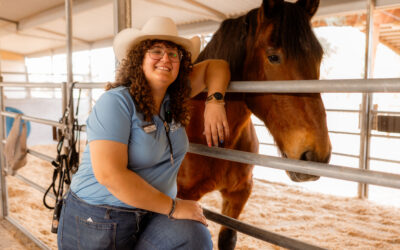
We sat down with two program participants, Tessaliz Quiles Delgado (Education Manager — Community Engagement, Cleveland Metroparks Zoo) and Alex Rodriguez (Human Resources Manager — Diversity, Equity & Inclusion, San Antonio Zoological Society), to capture their perspectives and what they’ve learned.

Tessaliz Quiles Delgado

Alexandrea (Alex) Rodriguez
On what inspired you to apply to the AMLAZ program/how you got here:
Tessaliz: Looking back to my journey, there are certain people who have inspired me and made an impression on me — a mark that will last a lifetime and beyond. In moments of uncertainty, they’ve said something that has given me hope and helped me in my career journey. One of my goals is to be able to inspire and open bridges to others in the same way these leaders did for me. To be a great leader you need to invest in your skills, which is what inspired me to join this amazing program.
Alex: I was incredibly excited when MIAZS presented this opportunity, and upon learning of Leadby and Canopy’s involvement, my enthusiasm only grew. These organizations consistently demonstrate a profound commitment to leadership development and community-building, and I knew this collaboration would be exceptional.
The chance to learn alongside such a diverse group of individuals at various stages of their careers was truly inspiring. I’ve always valued opportunities to share experiences and insights with others, and this program offered an unparalleled platform for growth. Having dedicated nearly a decade of my career to DEI work, I recognized this as a unique chance to further develop my leadership skills and create a more equitable future.
As a MIAZS member sponsored by Leadby, I felt a strong responsibility to contribute meaningfully to the program. I was eager to share my DEI expertise while also seeking new challenges and opportunities to expand my impact. By participating, I hoped to not only strengthen my own leadership but also create a pathway for others from similar backgrounds to achieve their full potential.
On your biggest takeaways from the program thus far:
Tessaliz: The program has been amazing in many ways, particularly the management course and coaching sessions. At the time I began the program, I was promoted to Manager of Community Engagement at my institution, so the timing could not have been better! The program has supported the development of my managerial skills, such as understanding the hiring process, onboarding and integration, and effective communication. All of these skills have been incredibly useful in my new career as a manager.
Alex: We often hear that people just need an opportunity, right? We hear a lot: we just need to give those communities or those people an opportunity. But what I’ve really learned from having this first-time opportunity — to be surrounded by professionals of color and professionals from diverse communities specifically — is that they’re MAKING opportunities. We are out here making opportunities. We’re no longer in a position of just being thankful for the platform: we’re taking full advantage, we’re thriving, and we’re using that platform to launch up to the next step. Being in this cohort has definitely shown me that there are more of us with tenacity, passion, and drive than I think communities as a whole understand. Whether you’re looking to find those mentors who look like you or who come from backgrounds like you — we’re realizing there are more of us here.
On the cohort experience:
Tessaliz: During the months that I’ve been in the program, we have been building a supportive and strong community. I have loved our coaching sessions in our cohort, where everyone brings their ideas and exchanges constructive feedback and support. The level of comfortability that the group provides has been amazing and unique in many ways. For me, it is important to provide these spaces to our community. It has been amazing, as it is not often that I feel I can express myself in group settings. It truly feels like a family. The rich diversity in the group has been amazing! Everyone in the cohort comes with the mindset to help each other share their experiences and to grow together.
Alex: As a Mexican American myself, the best feeling I can describe is that it feels like I’m reunited with my cousins after I don’t see them for awhile. I think many family dynamics can relate to that feeling of: oh, I haven’t seen you in so long and it’s just an instant connection.
That’s the feeling that I get with this community. And while no community is a monolith, in this specific cohort — with so many leaders and upcoming leaders of diverse backgrounds, in different ethnicities and genders and races — it’s one of those feelings that you almost don’t realize that you were missing that connection. This cohort fills that connection instantly.
It was very, very quick when we were all in the same virtual room that there wasn’t a concern of: what can I say or not say? It was understood that we were brought here together for a reason. It was a competitive application process to get into this group, and so we all came into it understanding that we were selected for a reason, not only as individuals, but for what we could do together as a cohort. So, it instantly felt just like a long-lost family.
On the value of one-on-one coaching sessions:
Alex: I could go on and on about every single fragment of the program. But personally, for my growth and development, the most beneficial aspect has been the one-on-one coaching sessions.
I am privileged to have more ample opportunity to have group sync process and group thought sessions; it is a privilege to hear and learn from other people’s perspectives that differ from your own. But as a young professional Latina who doesn’t have resources from my family to show me: these are the steps you take, this is how you do this, this is how you do that…having this one-on-one development opportunity is phenomenal because you need to be not only supported, but you also get to be challenged in your thoughts. One-on-one coaching has provided me a level of support through a challenge that I didn’t know I needed. This opportunity to develop my senior leadership skills is invaluable. Access to such experiences can often be limited, particularly for individuals without privileged backgrounds.
So as a young Latina, I was developing at my own pace, and having this opportunity is something I’m forever grateful for. These sessions have really helped me see that growth is not linear; there’s not one carved-out path for success.
On the project Tessaliz is working on for the program culmination:
Tessaliz: For my project, I had to step out of my comfort zone. I started developing a children’s book — an educational storybook — about the Puerto Rican Crested Toad (PRCT), “El Sapo Concho.” I’m writing in English and Spanish to make it accessible to the communities in Cleveland, Ohio and back home in Puerto Rico. The book will highlight the importance of the toad in the ecosystem and the efforts that Cleveland Metroparks Zoo has been making toward the PRCT conservation. Additionally, I will be working with a local artist to develop the illustrations for the book.
Once completed, my plan is to distribute the book in neighborhoods surrounding the Zoo (libraries and schools), and in areas in Puerto Rico where conservation efforts for the species are ongoing.
Growing up in Puerto Rico, I was always aware that the conservation aspects and ecological aspects aren’t talked about much. So, having a message around the Puerto Rican Crested Toad is a good starting point. I think every action starts from an educational standpoint.
I don’t have any experience writing children’s literature! This will be my first time, but I’m excited because it’s something out of my comfort zone and something that will impact the organization and the community, and that makes me very proud.
It is funny because since I started working at the Zoo and learned of the efforts on the conservation of the PRCT, I have desired to work and develop a project around this species — a dream that has come true. I am more than grateful for the support and the opportunity that Cleveland Metroparks Zoo has been giving me.

The Puerto Rican Crested Toad
On the topic of conservation and how people can make a difference:
Tessaliz: A topic that resonates with me when people ask me about conservation and how we can make a change and impact in the field is “equitable access” to conservation. As leaders, we have the power to make changes, open bridges to others along the way, and to foster an equitable environment. Equitable access to education: providing information that empowers our community and helps us collectively conserve the environment. To be able to achieve a healthy environment and empower people to take civic action, we need a different approach and to tackle issues using different lenses. For example, asking ourselves: What are the needs of the community? What tools does the community need to act in relation to their environment and conservation initiatives?
Once we have those answers, we can collectively make an impact. On the same note: as a society, we have lost our connection with a healthy environment, animals, and how we see ourselves in society and how we impact these environments. I believe that once we can identify what our needs are as a community, we will be able to identify what a healthy environment should look like and foster healthier practices that promote environmental conservation.
On leadership learnings from the program:
Tessaliz: Entering my new role as Community Engagement Manager, the whole program has been very beneficial. In particular, two segments of the class were what I needed the most at the moment: “Effective Communication” and “Finding and Hiring the Right People.” These courses gave me the necessary tools (onboarding processes for new employees, importance of collaboration, setting expectations, and professional integration) to advance on my new task as a manager while I establish and grow my team.
Alex: I’ve always considered myself empathetic, but the program’s deep dive into emotional intelligence opened a new world for me. Exploring the intersectionality of emotional intelligence and its impact on both individuals and groups has provided invaluable insights. This newfound understanding has significantly expanded my leadership perspective.
On how people and organizations in our field can further their impact:
Alex: The AMLAZ Program is a testament to the power of observation and action. I urge organizations to follow suit and become more attuned to the opportunities emerging in our industries. While not every organization can create opportunities of this capacity, all can play a role by supporting existing initiatives and fostering an equitable environment. By collaborating and investing in programs like AMLAZ, we can create a future where everyone has a fair chance to succeed.
I’m incredibly fortunate to be part of such a passionate cohort. However, my greatest hope is that the success of this program inspires broader organizational change. We need more leaders to recognize the value of diversity and inclusion and to actively create opportunities for their teams. The overwhelming response to the AMLAZ application demonstrates the immense need for such programs.
The partnership between Canopy, MIAZS, and Leadby is groundbreaking and has the potential to be life-changing. I hope this initiative serves as a catalyst for others to follow their lead and create similar programs that empower individuals and transform industries.
On professional growth and next steps:
Tessaliz: For my career path, I envision a future with the opportunity of career advancement and to aid others along the way. I want to keep growing as a professional in the community engagement field and as a DEI leader. But at the same time, I want people that don’t see themselves reflected in this field to feel that their voice matters and that they have a space at the table to make decisions. I want to open bridges that allow for the integration of marginalized communities to feel represented.
The program has given me the courage to believe in myself and continue to improve in my career. Sometimes, as a minority, you put too many blocks on yourself, right? You may be compared to other people; for example, my first language is Spanish, not English, so sometimes I feel that people look me aside because my English is not perfect. But in that moment, I remember the following: I am more than how I sound or how I speak, I bring a whole new perspective and background to the table, and sometimes being different makes people uncomfortable. Being surrounded by amazing people who share commonalities and also have different perspectives gave me the courage and the reminder to speak up and believe in myself. And I think that’s very important, and that’s due to the people that are in the program! And to Laura [Martina] — she’s amazing.
Alex: My ultimate career goal is to become a Chief People Officer. I’ve been privileged to build a career in diverse sectors including Politics, DEI, Human Resources, and Training and Development. I envision myself as a strategic leader, shaping organizational culture and driving business success through people-centric initiatives. It would be one of the greatest opportunities of my professional career to be in a position that strategically works alongside executive leadership to champion for our communities, institutions, and our industry.
My unique perspective, shaped by my identity as a queer, disabled, first-generation Mexican American woman, fuels my passion for advocacy and creating inclusive environments. I am determined to be a role model for future generations, demonstrating that individuals from all backgrounds can achieve leadership positions. We are our ancestors’ biggest dreams. By breaking down barriers and paving the way for others, I hope to inspire and uplift my community. Together, we can forge new opportunities for current and future generations.
—
If you missed our conversation with David Smallwood and Rosalío Rubio, two of Canopy’s sponsored participants, check it out HERE.