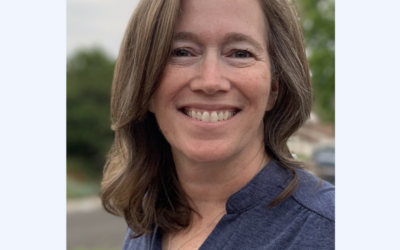
The Advancing Minority Leadership in Aquariums & Zoos Program (AMLAZ) is now in its second year, and Canopy is proud to continue our sponsorship of this vital leadership development opportunity in partnership with MIAZS and Leadby.
We interviewed Chris Conner, one of our sponsored participants, to hear about his experience in the program thus far, his leadership growth, and his goals for the future.

Hi, Chris! Tell us a little about yourself and your background in the field.
My name is Chris Conner, and I have the pleasure of being part of the second AMLAZ cohort. (Super excited to be here — 100%, for sure.)
In my previous role, I was at Brookfield Zoo Chicago. I’ve since transitioned out of that position, but I had a great experience there. Right now, I’m in that in-between phase — but this summer, I’ve been focused on wrapping up the bulk of my research for my PhD, so it’s been a great transitional period.
I’ve spent most of my adult career working in zoos and aquariums, holding a variety of roles over the years. I actually started out right at the foundation — in animal care and education. I was lucky enough to do both at the same time: one in the morning, the other in the afternoon.
Eventually, I moved into management, and in my most recent role at Brookfield, I led the teen division: the youth development department for the institution.
My PhD is in sustainability education, but I have an emphasis in conservation — particularly in Black intersectional conservation — so focusing on the matriculation of Black professionals through conservation, particularly in zoos and aquariums.
What inspired you to apply to the AMLAZ Program?
So it’s really three or four things…
The first is something I touched on earlier — it aligns with my values. As a Black man in conservation, especially working in zoos and aquariums, I’ve had to navigate a lot of inequitable systems. This program is actively working to disrupt those systems and equip both current and future leaders with the tools and access needed to dismantle them. That naturally drew me to the experience.
The second reason ties into completing my PhD. I realized I was growing as a researcher and scholar — which is great — but I also wanted to grow as a leader. I wanted to make sure I was developing just as much in terms of leadership skills and capacity.
The third reason is more personal. I had the chance to meet people from around the world professionally — something I never imagined. Honestly, I never had a strong desire to advance beyond my previous role before Brookfield Zoo. I was a coordinator, on the ground, seeing the real-time impact of my work, and I felt completely fulfilled. But as you grow and gain new experiences, you realize you can have a deeper, broader, or more widespread influence. When I transitioned to the Brookfield role, I recognized that I did want to maximize both my impact and influence. And this program helped fill in some of the gaps — those things we often don’t get when we’re figuring it out alone.
And finally, I’d say the last reason was Rosalio Rubio, who was a member of the first AMLAZ cohort. He was incredibly encouraging. But more than that, I saw how much he grew professionally because of this experience.
What are your biggest learnings or takeaways from the program thus far?
One of the more pronounced takeaways for me has been simply: naming it.
I think a lot of leaders — especially new leaders like myself — don’t always realize that we’re already doing the work of leadership. You’re out there driving change, but it doesn’t always feel that way. Then you get an opportunity like this — where you’re doing self-assessments and surrounded by a cohort going through the same process — and you have this moment of clarity: “Wait a minute, I have been reframing the blame this whole time…I just didn’t know that’s what it was called.”
Or, on the flip side, you realize: “I’m not as strong at communicating effectively with my immediate team as I thought I was.”
That kind of reflection has been a huge takeaway for me.
Another big insight is how amorphous the leadership journey is — especially for minorities in this field. Our paths are all over the place. We experience so many different things, and sometimes we experience the same thing in multiple, complex ways. There’s no single roadmap. So getting to grow and learn alongside people who are in positions of higher authority — people with more social or cultural capital in this industry — has been really powerful. That’s something I want to reflect on more when we wrap up the program.
I’ve really appreciated that this cohort includes leaders from all different levels. It’s kind of a double-edged sword: On one hand, I’m a manager navigating challenges that are surprisingly similar to what a Senior Vice President is facing. But on the other hand, it gives me hope. If they’re doing the work — if they’re showing up and being vulnerable and honest about the areas they’re still growing in — then maybe the leaders above us are doing the work. And that gives me hope that our work might get just a little easier, a little smoother, because of it.
What has the experience been like of forming a community with this cohort?
I think the most basic — and kind of wild — realization is that many of us didn’t even know the others existed. Even though we attend the same conferences and work in similar roles, we often don’t know about each other, or we don’t have access to each other. We know we’re out there… but real access? That’s something different.
And sometimes, life just happens — life be life, right? You don’t always have the time or space to pause and cultivate those relationships. So being part of this experience — where we’re intentionally here to build relationships and learn alongside one another — that’s been huge.
We’ve all connected in different ways. Some of us have met up in person, if we live close enough, and those connections are so valuable. I’d love to say it’s helped me at work — and it has — but honestly, it’s also helped me navigate life.
We’re all in this field, and people in this field often share similar values. None of us are in it for the money, right? So we connect on deeper things — like how we balance our lives, how we stay grounded — and that’s been really meaningful.
A few of us from my cohort have connected on that level, and now, as I’m looking to transition into a new role, having this cohort has been incredibly helpful.
They’re the ones saying:
“Hey, you should check out this opportunity,”
or “I know someone hiring — let me connect you,”
or “You’ve got the skills — why not come over here?”
It’s been that kind of support system.
How has the program helped you personally grow your leadership skills?
I think the most obvious area of growth has been in those power skills. I can see how I’ve definitely refined a number of them: from navigating conflict to becoming more effective and efficient in my communication, especially with my immediate team.
For me, that part has always felt a little ambiguous, because you’re constantly trying to balance how you communicate down to your team while also managing how you receive information from those above you. But I’ve seen real growth in how I handle that now.
Most importantly, though, has been self-advocacy. I’m now much more confident and capable when it comes to telling my story as a leader — one that reflects my capabilities, influence, and the outcomes I’ve achieved. Before this experience, I wasn’t able to do that effectively or efficiently.
So I’ve seen a lot of growth in myself — both as a leader and as a professional in this industry.
What are your professional or leadership goals for the future?
Going through this academic journey, I’ve developed a newfound love for research — one I didn’t really have before. I’ve always enjoyed being a scholar in some way, but now I appreciate it on a deeper level.
That said, long term, I don’t see myself staying in academia. There was a time when that felt like home to me. Especially in this field, I was always in some kind of education role — whether that was on the ground, in an outdoor classroom, or in a traditional one.
But I think I’ve grown beyond that in terms of how I see myself as a leader. Looking to the near future, the next role I’m aiming for is one where I can really apply the leadership skills I’ve built — where I can help bridge vision and implementation, and drive impact by supporting teams and projects that matter to me, and also matter to future generations. That’s the next immediate step.
And beyond that? Well…life has a funny way of leading you down paths you never would’ve chosen — and yet, they end up being exactly what you needed. Sometimes they even take you somewhere you didn’t know existed. So that’s how I’m thinking about the future — focused on the next step, but open to wherever the road might lead.