The Advancing Minority Leadership in Aquariums & Zoos Program (AMLAZ) is now in its second year, and Canopy is proud to continue our sponsorship of this vital leadership development opportunity in partnership with MIAZS and Leadby.
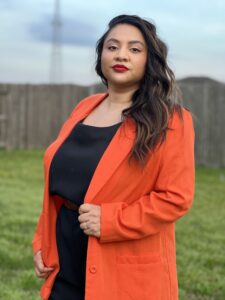
We interviewed Stephanie Gonzalez, School Partnerships Supervisor at the Houston Zoo, to hear about her experience in the program thus far, her leadership growth, and her DEIA work.
What inspired you to apply to the AMLAZ Program?
I really believe that leadership development is important at every stage. I always feel like there’s room to grow. So for me, applying for the AMLAZ program was putting intention into action. I didn’t just want to say that I’m working on myself; I wanted to show it. learned about the program through MIAZS and Alex (Rodriguez), who attended last year, and I was inspired to apply. I was especially drawn to the program because it addresses equity issues within our field — and it creates a space for the BIPOC leaders to connect, support one another, and grow together.
What have been your biggest learnings or takeaways?
I’ve learned so much and gained many insights through this program, but one of the most impactful takeaways has been learning to communicate with confidence. I’ve also developed new management strategies that I’ve already begun putting into practice. These tools have helped me advocate more effectively — not just for myself, but for others as well. It has truly been a game changer in my leadership journey this year.
In the past, when I was in a room, it often took me time to process what was being said before I felt ready to contribute. With so many voices, mine would sometimes get overlooked, and I’d just let it go and move on. Now I feel a shift. With the support of my AMLAZ cohort, I’ve built the confidence to speak up — pushing my voice out even if it isn’t heard right away, and reiterating it later in the meeting if needed.
That change has been huge. Sitting in AMLAZ meetings, hearing others share, I realized I wasn’t an outlier — I was thinking the same things they were. That gave me the confidence to bring my voice back to the Houston Zoo in a stronger way.
Especially as a Latina, there are times I’ve felt like I wasn’t speaking English—even though I know I was speaking perfect English. I grew up with both languages and never learned one before the other, so sometimes I wonder: I speak pretty well…why does it get overshadowed? Then someone else will say the same idea a little more eloquently, and I think, I really tried to express that the best way I could.
AMLAZ has helped me with that. It’s not just about finding better ways to formulate my words — it’s also about having confidence in them. I’ve learned to trust that what I say has value, and that no matter the exact words I use, my ideas are meant to be understood.
How has the program helped you grow as a leader?
I’ve been in the zoo and aquarium field since 2013, and self-advocacy has never come easily. It often shows in interviews — my voice doesn’t always reflect the strength of my work. But once people see me in action, they realize the difference. Through this program, I’ve learned to find and stretch my voice, using it to lead with more clarity and purpose. It’s empowered me not only to speak up, but also to create space for others — especially in leadership settings.
I’ve realized I’m not the only one who feels this way. As our industry becomes more diverse, I see many Latinas on our team navigating similar challenges. That’s been a powerful reminder to advocate not only for myself, but for their voices as well.
How has the experience of building community with this cohort been?
They’re such a great group. I’m so grateful to have met them and to gain new perspectives from across the zoo and aquarium field.
For a long time, I struggled to connect within the industry. I didn’t really start making those connections until about two years ago, when I attended my first AZA conference. Conferences are valuable, but not everyone has access to them — and for nearly ten years, that was my experience. So when I finally got to go, I made it a point to put myself out there and meet as many people as I could.
What I love about the AMLAZ cohort is that it goes beyond those brief conference conversations. Instead of a quick chat or even an hour at dinner, we’ve had months to spend together — really listening, sharing ideas, and building relationships without rushing to the next interaction.
That’s helped me strengthen not just my communication skills, but also my approach to networking. Someone once told me at AZA: your network is your net worth, and that has stuck with me. Since then, I’ve focused on building my network not just for myself, but as part of creating community.
That’s what I value most about this field: zoos and aquariums all share the same larger mission, even if we word it differently. We’re working toward the same goals, and there’s a deep sense of community in that.
What are your professional or leadership goals for the future?
About six years ago, I had to start over in this field. I’d been working in a toxic bird show environment that didn’t really connect to zoos and aquariums. It was a job, and I gained valuable experience working with over 100 bird species and learning about training and advocacy — but it wasn’t the best environment.
Since then, my journey has focused more intentionally on equity in our industry, especially for BIPOC professionals and frontline staff. That’s central to what I do at the Houston Zoo now. As a proud Latina, I feel a responsibility to serve my communities — whether that’s my family, AZA, AMLAZ, the Houston Zoo, or my hometown of El Paso. Wherever my journey takes me, I carry those communities with me.
I also come from the keeper world, and I’m passionate about improving working conditions for animal care staff. I’ve served as a founding member and now Chair of the Houston Zoo DIA Committee, helping to expand our efforts over the past four years. My goal has been to make sure staff feel understood and heard — advocating for changes, being a trusted listener, and offering support without judgment.
Looking ahead, I hope to step into a leadership role where I can create systemic change: supporting staff development, reducing DEIA-related frustrations, and fostering a more inclusive workplace. I want to bring what I’ve learned back to uplift others — encouraging colleagues from underrepresented backgrounds to grow alongside me.
Ultimately, my mission is to build community-centered zoos that honor both people and wildlife. And yes, I do aspire to the C-suite, because that’s where I can make the greatest impact.
Can you tell us more about your DEIA work?
Our committee — the “Idea Committee,” we call it — advocates for change by listening to staff and turning their ideas into action. For example, we launched a storytelling coffee talk series to celebrate the diversity of voices at the zoo, helping people feel more connected.
When staff expressed interest in participating in the Pride Parade, we built the connections to make that happen and secured the resources to support it. We also worked toward becoming a Certified Autism Center, responding to staff who wanted training to better serve our guests. Behind the scenes, we’ve been pushing forward these staff-driven ideas and amplifying their voices. The committee includes about 30 people from 30 different departments, all bringing perspectives to the table so we can create real DEIA change.
It’s only been five years, so it’s still a work in progress. It’s a long journey. I think the hardest part is when people feel like the work is finished — like they’ve tied it up with a bow, checked every box, and can move on. But in reality, DEIA work is an ongoing journey.
It often means sitting in uncomfortable spaces, and that can be hard for people. But that discomfort is part of the process, and there’s always room for growth.