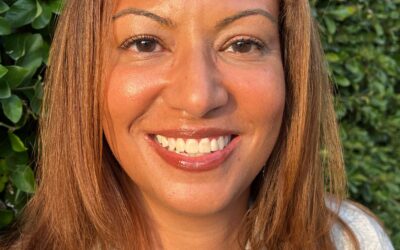
Yasmine Gaudin (she/they) joins the 2026 Advancing Minority Leadership in Aquariums & Zoos Program as one of Canopy’s sponsored participants. She is currently the Assistant Supervisor of Day Camps & Family Programs at the Phoenix Zoo.
Presented by MIAZS in partnership with Leadby, the AMLAZ Program is an 8-month, high-impact program that accelerates the growth of BIPOC, mid-level leaders. As AMLAZ enters its third year, Canopy is proud to continue our annual sponsorship of three participants in the cohort.
We chatted with Yasmine about their theater-to-zoo career pipeline, their passion for education and coaching, and a recent expedition to the Crocodile Research Coalition in Belize.
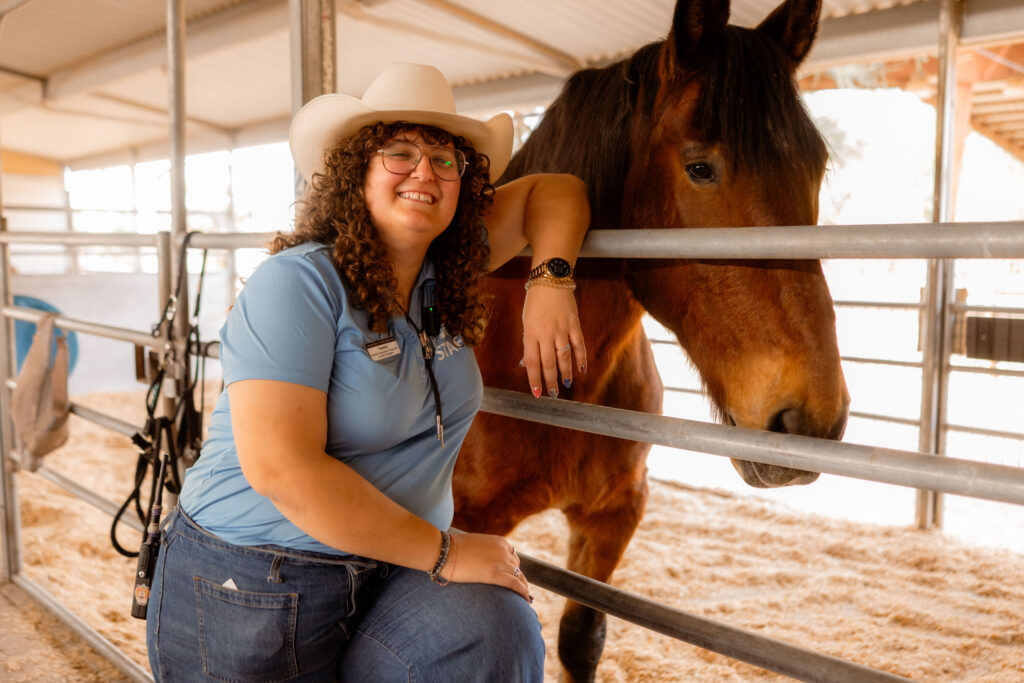
Yasmine Gaudin
I’d love to hear more about your background and how you landed in your current role at the Phoenix Zoo.
I got my degree in theater, and I was fully ready to be a professional actor. Then one thing led to another and I fell into teaching kindergarten for about five years (which, honestly, was a very good use of a theater degree). But teaching grew increasingly harder, and I wanted to pivot into more informal education. When an opening came up at the Phoenix Zoo, I left the interview thinking: I think this is the perfect job for me. And they thought so too! The reason I was brought on isn’t because I’m an animal expert — it’s because I’m a kid expert. I bring a deep background in child brain development and behavior, curriculum writing, program design, and emotional deescalation. Our camp program runs from incoming kindergarteners all the way through ninth grade, with high school junior counselors on top of that. I’m definitely the younger-kid specialist and the go-to person for tricky behavior situations.
What inspired you to apply to the AMLAZ Program?
A few things converged. I went to my director, Carrie Flood, and told her I wished I had more community with people who shared my experience — specifically navigating leadership as a person of color. She pointed me toward MIAZS and said, ‘They have the same energy that you do.’ So I checked out the website, saw the AMLAZ program, and filed it away as something to consider. Then at an AZA leadership course I took last February, I met Elise Bernardoni (Canopy’s Director of Engagement). After her presentation, I pulled her aside and asked if she knew about AMLAZ. She encouraged me to apply and that pretty much sealed it. The day applications opened, I was in.
What are you hoping to get out of the program?
Two things, really: community and tutelage. Because I have such a niche skill set, I think people sometimes look at me and think: Yasmine’s got it handled. But one of my biggest ongoing questions is: How can I be a better leader? And specifically, how do I use those skills to pour back into my team — to build them up and help them figure out how to advance?
I also want to work on my leadership presence more deliberately. Coming from teaching, I’m an extremely capable individual contributor. I can power through a mile-long task list, handle a dozen things at once, manage chaos — that’s just Tuesday at camp. But I’ve learned that that approach doesn’t exist in a vacuum. How does your behavior set standards for your team without you even realizing it? How do you delegate instead of just absorbing every problem that comes your way? How do you trust your team and create growth opportunities for them instead of solving everything yourself? Those are the things I want to get better at.
What do you think is a unique perspective or skillset you’re bringing to the cohort?
The emotional side of leadership. That’s something that’s really core to my philosophy. Growing up, I was always told that if you want to be a good leader, you have to be emotionless. I’ve come to believe the opposite — that emotion is a valuable source of data, and that creating a workspace where emotion is welcome is actually a leadership strength, not a liability. In a camp setting, I don’t always have concrete data when something goes wrong. Sometimes the only signal I get is that my counselors are burnt out. Learning to read that, validate it, and respond to it is its own skill. And because I work with a lot of very young, early-career staff in seasonal roles, a huge part of my job is coaching them on how to find their voice, describe their needs, and give feedback — even when they’re frustrated or overwhelmed. I love studying that. I think it’s something the AMLAZ cohort will find useful.
You mentioned wanting to build more community. Did the first cohort session give you that feeling?
Oh, completely. One of my notes from that first meeting literally just says: I love this group. I am a huge note-taker — that’s just how my brain works — and that was the first thing I wrote down. The group just felt very energetic, caring, compassionate. I’m really excited.
Do you have any initial ideas brewing for the final project?
I do — and there’s one that, as I say, ignites my heart’s fire the most. I want to create a comprehensive framework for working with children at the zoo. That means a set of best practices for child interaction across different contexts: day camp, night camp, exhibit floors…and then specific trainings for each. I also want to develop a ‘train-the-trainer’ component, so that as a leader I can equip others to implement these approaches, not just do them myself.
The bigger dream is to take this to an AZA conference backed by real data. I’ve already had enough conversations with camp professionals across the AZA network to know that I’ve become ‘the behavior person’ — people seek me out because they’re dealing with the same challenges. But there’s so much more to it than one training. It’s how you design a schedule that accounts for behavior needs. It’s how you hire for this kind of work. It’s how you coach staff through it in real time. I want to package all of that into something I can actually measure and share.
Honestly, a big part of the motivation is that I have a theater degree and that’s it. All the philosophies and methodologies I’ve developed have come from my own research, training, and years of experience — but I don’t have a paper trail. I want to figure out how to navigate professional spaces without the traditional credentials, and how to make the case that what we’re doing genuinely advances conservation outcomes.
Tell us a little about your recent expedition to work with crocodiles in Belize. So cool!
I spent a month with the Crocodile Research Coalition and it was incredible. The trip came through a conservation grant my organization offers to full-time employees. We did educational outreach, curriculum writing, wildlife rescues, biodiversity surveying, and nighttime capture surveys — going out in the dark with lights to find crocodiles. We took kids out to mangroves for trash cleanups, and we worked with a youth volunteer group that came out to work directly with the ambassador crocodiles.
There is a Mayan belief that the world rested on the back of a crocodile who sacrificed himself to protect the earth — that when his blood fell to the ground, people emerged from it. The crocodile is woven into the story of human existence. It completely reframes how you think about conservation. These animals aren’t just ecologically vital; they’re part of who we are.
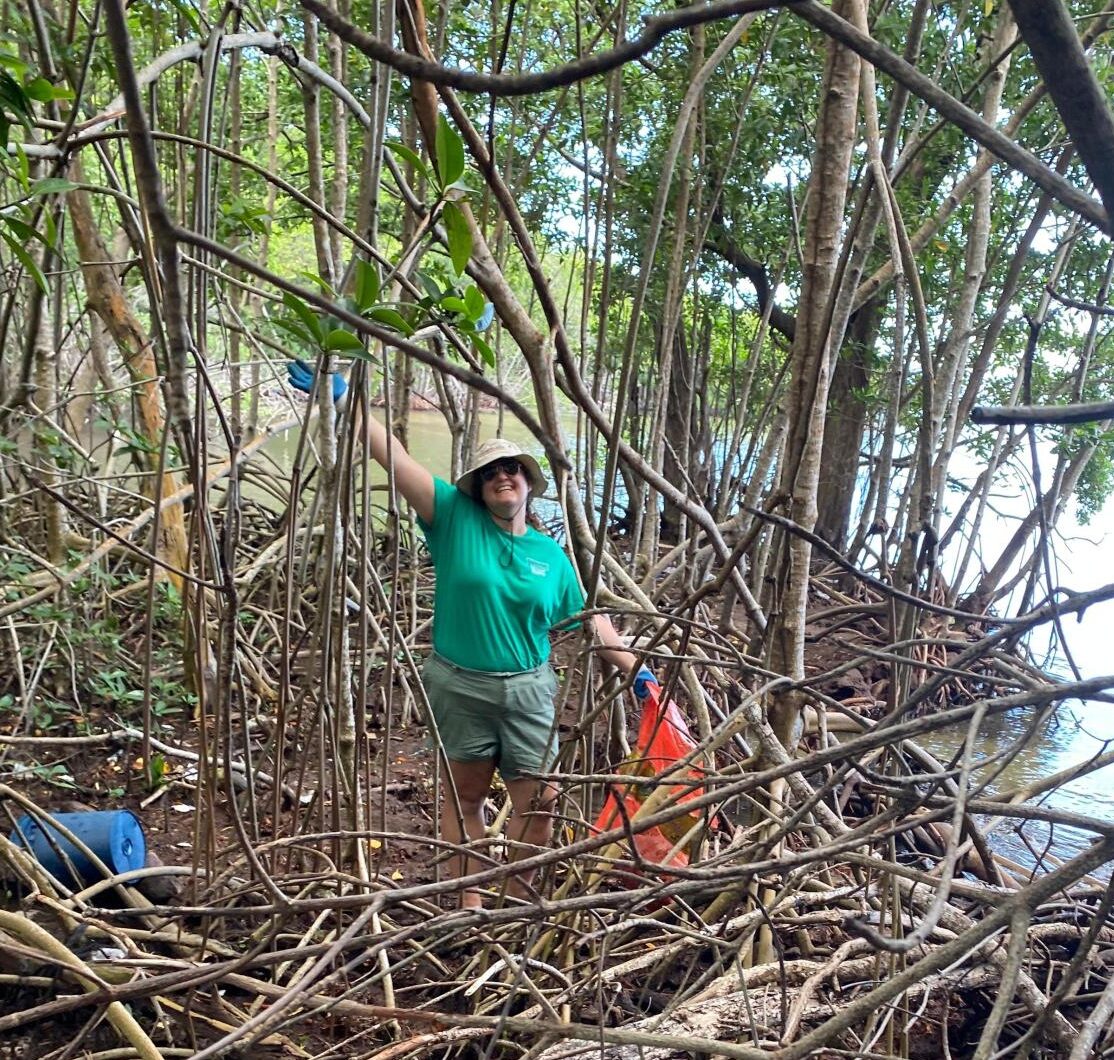
Yasmine in Belize, working with the Crocodile Research Coalition
This interview has been edited for length and clarity. Learn more about the AMLAZ Program here.