By: Lori Perkins
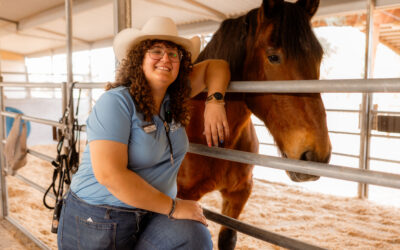
Shannon Farmer is the North American Pollinator Protection Campaign (NAPPC) Coordinator for Pollinator Partnership, a nonprofit organization dedicated to protecting pollinators through conservation, education, and research. She has previously worked in various zoological institutions including Disney’s Animal Kingdom, The Seas with Nemo and Friends, Seaworld Orlando, and the Philadelphia Zoo. She is passionate about conservation and introducing young people and underrepresented people into the conservation field. Shannon writes a blog about her passion and experience as a young Black woman in the conservation field for Minorities in Aquarium and Zoo Sciences (MIAZS). She is excited to be at the point in her career where she can mentor and continue to be mentored by incredible trailblazers. She hopes to continue gaining valuable experiences to help lead her communities forward to a brighter future.
What qualities of a great leader do you seek to embody?
I aspire to be an empathetic, engaging, considerate, and clever leader. I think it’s important to be able to engage people where they are and look for creative ways to solve problems. I also always want to be a leader that can learn something new from the people around me.
What makes a great leader is often the people who surround that person. If the people around me challenge me to continue to cleverly look at every angle, to speak uplifting words, and to continue to engage in kindness, I’m more likely to grow in those attributes.
What experiences do you think would be most influential in helping you learn how to lead a mission-based organization?
If I continue to engage with people who are different from me, in interests, job description, background, and passions, I’ll grow more fully as a person and leader. Diversity in experiences and the people who surround me are truly the spice of life. If I were to only try experiences that I’m comfortable with, I’d never learn how to fail well and learn from it. I hope that my experiences will continue to be dynamic and take me by surprise. I hope that every time I’m tempted to become stagnant in my comfort zone, I’m pushed to go on a different path. Even though that often comes with growing pains, I’ll at least be growing.
What strategies do you recommend to enhance diversity at the higher leadership levels?
Having the humility to listen to the people who aren’t the majority in the room is vital to growth. The second step is resilience to continue to listen and take constructive action with and for people. If you don’t put in the time to potentially understand your worldview is not everyone’s and to take more than a performative solution, diversity work will grow stagnant.
I would suggest also not just putting the expectation to fix diversity on the few diverse people in the room. And if they do choose to get their perspective, compensate them. People pay a lot of money for diversity consultants, and to expect folks to give their emotional labor for free is not respecting their experience as an expert in their lived experience.
I also would encourage higher leadership to truly evaluate their willingness to dig deep into what their motivations are. I can tell you from my experience that folks who are in the minority can tell whether a leader is being genuine or not in their desire for advancement. It can’t be about putting on a good face, it has to go further than skin deep.
As time goes on, leadership can’t afford to not put effort into diversity. We’re in a new age where new solutions are desperately needed, and holding on to how things were always done will have devastating effects if we keep people out of places they deserve to be. Higher leadership will continue to miss opportunities and lose money if the belief that the issues of racism and lack of diversity lie somewhere else.
The only way to combat the lack of diversity is to address it boldly, compassionately, and wisely in every room they’re in. Enhancing diversity is looking in the mirror and asking what could be better. It requires leadership to not make assumptions on intentions or make excuses, it’s being realistic with hard truths and taking action without fear of failure. It’s knowing failure is likely to happen, having the humility to apologize, and the courage to do the work to make it right.
What advice do you have for other emerging leaders?
Everyone’s personal and professional journey will be a little unique, so I’m not entirely sure what’s the best advice for a ‘one-size-fits-all’ approach. But I know what I would say to a younger me. I would say to focus on developing a community of people who can uplift, challenge, develop, and look out for you. The relationship should be reciprocal, there should be a give and take of all these qualities in different seasons of life.
Sometimes you have a larger dynamic community in certain seasons, and sometimes you have a smaller, more static community. But these people will help you see you, they should help you develop a healthy sense of self-awareness. You should be able to gain discernment and confidence over time to understand what you want to strive for.
Sometimes bravery requires saying yes to something you don’t fully understand, sometimes bravery requires you to say no to something that you’re comfortable with. It’s important to understand how to prioritize what matters to you. Always assess what’s a distraction from what’s most important. Some things would stress me out to the point of getting sick years ago, that I no longer remember today.
What’s the most important risk you’ve taken in your career so far and why?
The moments where I decided to say no to some good opportunities were some of the hardest risks I’ve taken. There have been a few doors that opened for me that I could’ve walked through that I chose not to for whatever reason, and many people around me were surprised. But even though I’ve felt like I’ve run around mostly blind in my career path not knowing what’s next, some of the no’s that I gave helped me develop a sense of self-worth and self-awareness. I learned some no’s were painful because I wanted them, but they wouldn’t have led me to a thriving environment, and others I would’ve been fine saying yes to. But I was willing to risk unknown opportunities that may come from those no’s. My career journey has been full of closed doors and missed opportunities, but I think ultimately even in those moments where I felt like I was stalled at a stage, I found a better opportunity later. Discernment is an important muscle to stretch throughout your career journey.
What changes have you seen in leadership in this industry since you’ve begun working in it? Are these changes going in the right direction? Are they enough? If not, what else do we need to do?
I’ve seen a lot of emphasis on diversity in this industry in the last few years, and while I think it’s great, I do worry sometimes it isn’t to the depth it needs to be. There’s an acknowledgment of the startling lack of diversity—but there isn’t a real development in trust to be able to grant progression in the right direction. Many organizations do the minimum, but the big steps to make a real difference for marginalized folks aren’t there yet. People have also gotten tired of hearing diversity being thrown around, so it’s starting to wear down a bit. As long as the work of increasing diversity is treated like a trend instead of a normal reality, it will only continue to be surface level.
I recently went to a Wildlife Habitat Council conference in Baltimore and had the opportunity to sit in on a session about inclusivity in nature. Some of my takeaways from this session were very reaffirming to my personal experience. While there has been an emphasis on diversity in many businesses, it’s been rare for me to sit with leadership and have a session where reflection on actions was truly evaluated. It’s difficult to reflect on your own actions and come to feel like you’re the ‘bad guy’, and most folks go to lengths to avoid that feeling.
One thing I remember from that inclusivity session was that “tension creates focus”. While reflection may cause tension, the outcome of recognizing yourself in the mirror and knowing yourself is priceless. What I mean by this is being able to reflect on your motivations will free you to be honest with yourself and create room for change.
I deeply feel that this intimidating process is the step a lot of leadership searching for diversity miss because it’s uncomfortable. But I also know there’s no real way to create spaces for emerging leaders like me unless faces like mine are involved in creating them.
So, my advice is to accept the tension so that you can focus on your motivation. Understand why some of my advice may rub the wrong way and seek out why your reactions to diverse initiatives and change may challenge you. Leadership should be vigilant in seeking if they feel defensive when approached with a challenge of diversity and ask why to understand the true motivation for their actions.
What do you see as the next big trend(s) in the conservation arena?
It could be my current line of work, but I feel like bees are becoming the next big thing. People normally care about the charismatic megafauna but rarely care about the little invertebrates of the world. I hope that trend continues, and people start to feel delighted to see invertebrates the way I do. Maybe that’s a stretch but I do think we all could learn so much from the little things we don’t appreciate because we expect them always to be around—or “bee” around if you will.
I also believe that as the expanded issues of climate change affect all of us, there will be and should be a focus on how climate change intersects with every aspect of life. We saw how Covid-19 affected every aspect of our lives, and it’s a good time to reflect on how climate change would exacerbate all the social, health, environmental, and economic issues we’re already dealing with. The current and future generations will need to keep climate change as a focus for how we need to develop increasingly innovative solutions and keep climate change as a primary focus in those solutions.
How do you want to continue to grow and develop as a leader?
I hope to gain more confidence in myself and my knowledge as time goes on. I hope there’s never a moment where I feel I’ve learned everything, and I always have the humility and open mind to learn more from others.
What’s your favorite part of your workday?
I love going on little adventures. Sometimes working with such interesting people allows me to get a small scope into other career paths. I meet so many new people from whom I always learn new things. I feel no pressure to be an expert in any particular field because I have a lot of experts that enhance my knowledge.
Who do you look up to for inspiration or mentorship?
I’ve found in my hardest times a community of mentors that have helped me through. Some mentors were from a small season of needed inspiration. I’ve found inspiration from one-off interactions with role models and strangers in hard times. And I’ve found mentorships that have sustained me through moments of doubt and indecision about my worth.
I’ve always had my family thankfully, but I found as I got deeper into my career, I sought folks who are a little ahead of me in this field. Some of them had specific advice for my situation, and some of them simply related. I’m thankful that I had such a wealth of mentors and people who have pushed me on with and without me knowing. I’ve had professors, friends, role models, family members, managers, co-workers, and strangers speak hope and life back into my mindset.
I’m forever grateful for moments of inspiration and mentorship. It’s been so easy to feel isolated in this field—I’m often the only one in the room with my background, which isn’t a surprising factor for me, but I was surprised at how much that wears on me over time. I think I’ve always felt a bit of pressure to be on my toes about representing my entire culture in spaces where my culture and my people aren’t welcomed—whether in a directly or indirectly hostile environment. I struggled with constantly feeling like I had to be on my best behavior to prove prejudice wrong and to ensure doors are opened for people who share my culture after me.
One of my mentors from a previous position, Angel Price, told me to worry less about being tokenized and focus more on the fact that I’m already a trailblazer. It was such a groundbreaking way of looking at my position. That perspective was like a tool in my toolbelt on how to fight imposter syndrome, how to fight the feeling of not being welcomed. Whether I’m welcomed or not in whatever space I’m in, I’m already here—there’s no denying that power in my presence.
I’m so thankful for all the people along the way who have encouraged and empowered me. Sometimes mentorship came through book recommendations or practical ways to engage communities from someone who has been in my position like Curtis Bennet. Sometimes it was simply somebody who not only believed my experience and validated my struggle, but someone who had been through similar experiences like Corina Newsome. I once had a college professor, Dr. Hays, who got real with me and told me about how I may enjoy a different major and investigate other career options than being a veterinarian through biology, but to try conservation with environmental science.
I’ve found some of these moments of mentorships ended up being turning points in my life where I made choices that changed my career path. Some moments of mentorship were simply to help me get to the next day. That’s the beauty of mentorship because both of these were valuable in different ways. I’m thankful I’ve had people look out for me over the years and so many places where I can look to for mentorship. I’ve learned you can never be too grown up or too advanced in your career to gain insight from mentorship.