Zoo Advisors recently presented the ultimate findings to a new and exciting project which has consumed much of our attention over the past 12 months: a massive research study seeking to quantify and explore the contribution of partner organizations in the zoo and aquarium profession. Over the next two weeks, we’ll be sharing some of the findings from this study in a series of articles.
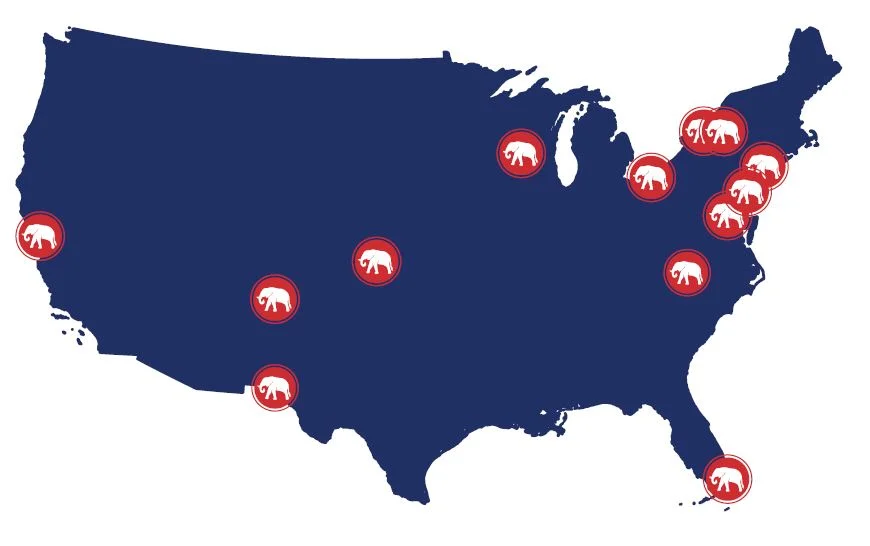
Fourteen partner organizations from around the United States participated in our study.
There are currently about 30 partner organizations in the AZA orbit, and 14 participated in the study. Each of them submitted a huge amount of data and documentation, including operating agreements, by-laws, financial records, and more. It amounted to 70 organization-years of data in total.
In short, our goal was to unpack and standardize information from disparate sources in an effort to answer a few questions:
-
How impactful are partner organizations on the industry?
-
What are the best practices for the partner groups?
-
What are some benchmarks for success?
-
What opportunities are there to grow impact?
The full report is very detailed, but we wanted to share some of the topline findings and observations in this first of three posts.

Every Organization is Unique
Zoo Advisors’ work with organizations across the profession has helped us understand the true diversity of operating models that keeps the industry moving forward. This study has demonstrated the variety of governance configurations that can exist and thrive in the “partner organization” niche. At the outset of the project, it was our hope that we would be able to draw more parallels and identify best practices between partner organizations, and while there were certainly some similarities, there were far more differences. This discovery raised a very interesting question: why do all partner organizations operate so differently?!
We looked for answers in our data analysis, in interpreting operating agreements, and by examining myriad other materials and found the lone thread that binds them: every one of these organizations’ core prerogatives is to support their partners, and each partner requires a different kind of support. Each participant has evolved to fill the gaps in its partner zoo’s capacity and complement its operation. Historically, partner organizations sprang up to fill gaps in fundraising, but as the political and economic landscape has changed, they have grown organically to pick up the slack and fill many needs. Support organizations have demonstrated an incredible agility, nimbleness, and an ability to grow and adapt.

Inherent Challenges
“Is this a good thing or a bad thing?” It’s both. On one hand, there is an argument to be made that this operating model (or lack thereof) is not only beneficial, it is required. Given the diversity in AZA partner organization governance models, it is impossible to create a one-size-fits all model. Each one has been custom-designed to best fit its zoo. On the other hand, this situation makes it difficult (if not impossible) to create universal guidelines and generalized best practices. The functions and systems of these complex organisms cannot easily be standardized. There are also the inherent challenges associated with multiple senior leaders and bifurcated organizations attempting to serve a common goal. To be successful, there must be extraordinary levels of communication and coordination.
For the numbers junkies, in our next post we’ll be revealing our benchmark findings, which cover everything from membership program ROI and dollars spent on marketing to annual capital contributions and financial stewardship.
If you can’t wait that long, drop us a line here and we’ll be happy to discuss the report with you.